 Tarotsmith
 Tarotsmith Shadow Alchemy
 Tarotsmith Horoscopes

Path Spread
Difficulty: Easy
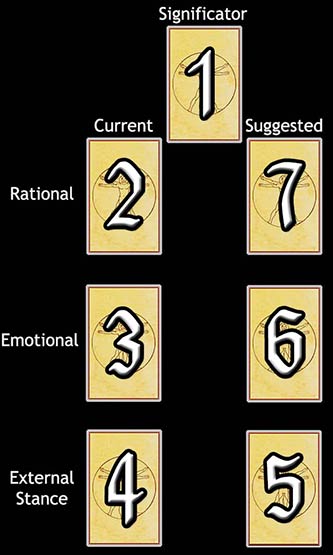
For the Path reading, one asks for suggestions how to behave properly to achieve a desired result. The Current column represents how the reader has been acting, and the Suggestedcolumn suggests how they should act to achieve a certain goal. The chart-like spread uses the standard three levels: Rational, Emotional, and External Stance (how one projects oneself outwardly). When comparing the Current and Suggested cards, the most important thing is to notice the differences between the two cards. It is these differences which hint at the behaviours that should be altered.
Card #1 is the significator, the card which should reflect the nature of the query and/or the desired outcome.
Card #2 shows the way the reader is and has been thinking. Card #7 suggests how to change the way one thinks to serve themselves better.
Card #3 suggests the reader's emotional attitude. Though it may seem difficult to manipulate one's own emotions, it can be done if one puts their mind to it. For example, acting a certain way such as smiling intently for a few minutes will lead the emotions to follow. When a person tries this, as silly as the exercise seems, they find this to evoke the emotion of happiness. For this reading, one should try to make themselves feel the way that Card #6 suggests.
External Stance means how one acts outwardly, how they hope others see them. Card #4 is about how the reader has been acting, while #5 indicates how they should act outwardly, for other people's sake. It is the differences between these cards that hint at what behaviour patterns should be altered.
Your Path Reading
| Current | The Significator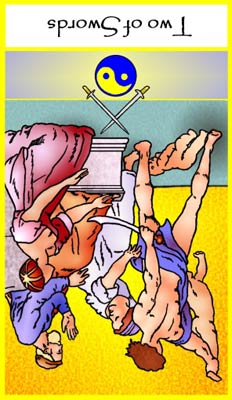 Two of Swords |
Suggested | |
| Thought | 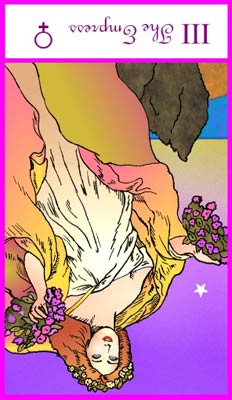 III – The Empress |
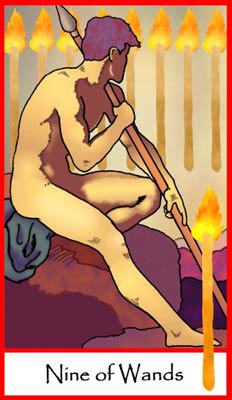 Nine of Wands |
|
| Emotion | 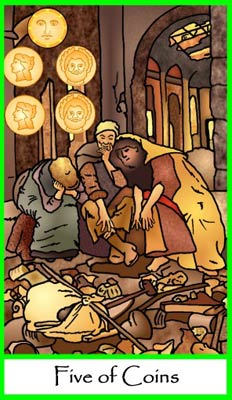 Five of Coins |
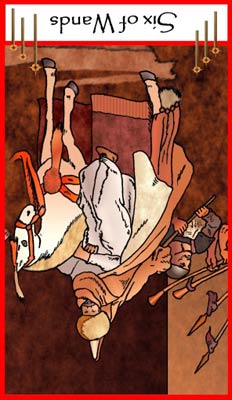 Six of Wands |
|
| External Stance | 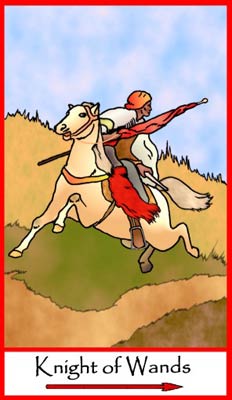 Knight of Wands |
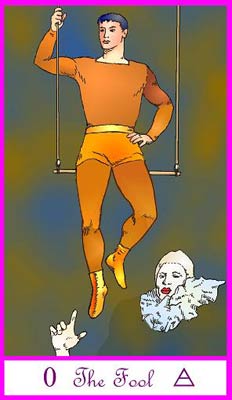 0 – The Fool |
The Significator
Two of Swords
A dilemma with no clear answer in sight. An ugly conflict, perhaps where one party is being deceitful or underhanded. A stalemate. A no win situation. A forced or unsatisfactory decision or resolution to a problem. Avoiding making a decision until you're forced to.
Current Thoughts
III – The Empress
A project is having problems coming to fruition. Obstacles to creativity, such as writer's block. Sterility or loss. Someone is being unproductive. Having issues with your mother. Being smothered by someone. Chaos. Stagnation.
Suggested Thoughts
Nine of Wands
Overcoming obstacles. Persistence despite setbacks. Gaining strength and fortitude as the result of hardships and difficulties – 'That which doesn't kill you makes you stronger'. Being prepared to fight if you have to, but not anxious for conflict. Choose your battles carefully. Setting firm boundaries in a relationship.
Current Emotions
Five of Coins
Experiencing financial strain or hardship. The need to get rid of unnecessary expenses and financial obligations. The need to ask for help. Not making the most of your resources or natural abilities. Feelings of abandonment. Being shunned or ostracised.
Suggested Emotions
Six of Wands
Success is not immediately forthcoming. Not receiving the recognition you deserve, or not getting the support you need. Victory leads to pride.
Current External Stance
Knight of Wands
Being spontaneous, eager for adventure, bold and courageous in a new enterprise. Living 'in the moment'. Someone who is the life of the party. A willingness to take a chance on a new way of doing things. Embracing change or being an agent of change.
Suggested External Stance
0 – The Fool
A time to begin something new, especially when done without bias or preconceived notions. 'Leap and the net will appear'. Keep an open mind. A situation with promise or potential. 'Beginners luck'.