 Tarotsmith
 Tarotsmith Shadow Alchemy
 Tarotsmith Horoscopes

The Love Triangle Spread
Difficulty: Complicated
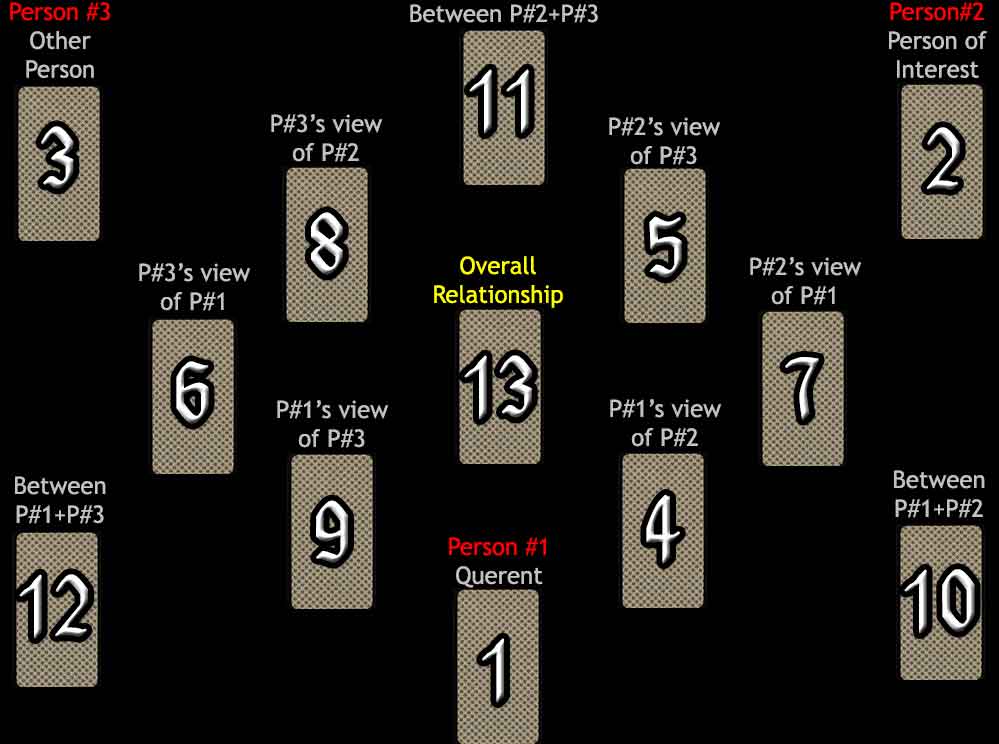
Casually referred to as the Love Triangle, this spread can be used to determine the dynamics of the relationship between three people, regardless of whether romance is involved. This spread is arranged in the form of a hexagram, consisting of several large and small triangles. This tarot spread may seem somewhat complicated, but it is not entirely that difficult.
The first step is to interpret the card for each individual position in the spread. Generally, one might ask about a relationship they are involved in, but this does not have to be the case. Ordinarily, the reader's representative card is #1, their main person of interest is #2, and the other person would be #3.
The second step fills in the downward triangle and involves further examination of the individuals through their views of the other people. Each person has two more cards showing the way they see and relate to the other members of the triangle. For example, Card #6 indicates how Person #3 relates to Person #1, while Card #9 stands for Person #1's attitude toward Person #3.
The next step completes the upward triangle and the hexagram, focusing on cards #10–13. It also completes the many smaller triangles and hints at the potential for each relationship. The final card, #13 can be considered the significator of the reading, which suggests the overall potential for this three-way relationship.
Your Love Triangle Reading
| P#3 | 3to2 | 2+3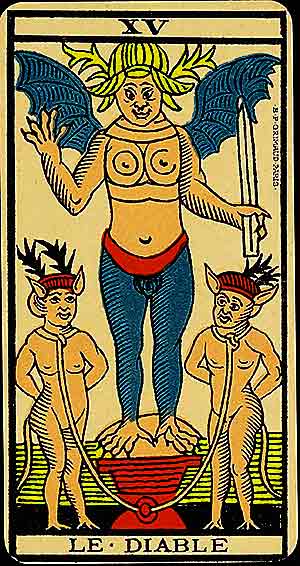 |
2to3 | P#2 | ||
 |
3to1 | 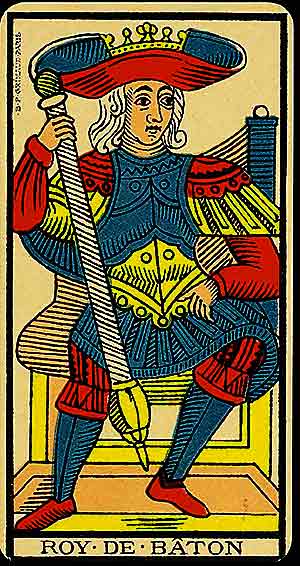 |
Overall | 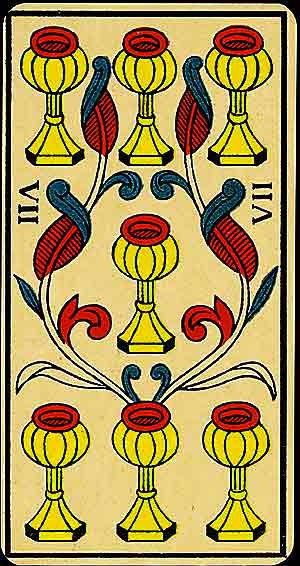 |
2to1 | 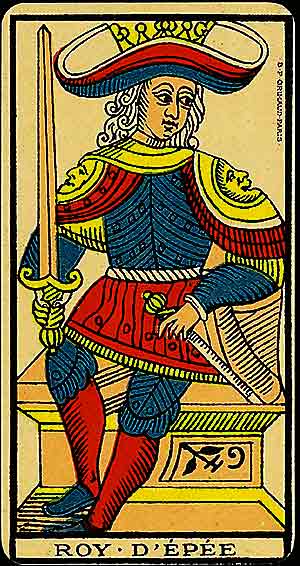 |
| 1+3 | 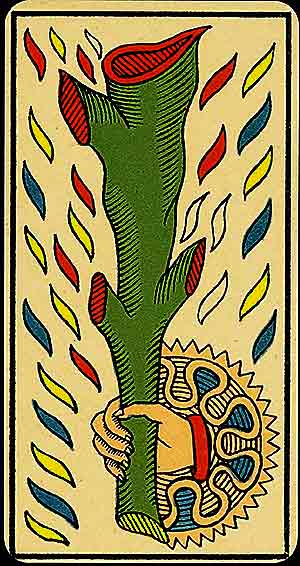 |
1to3 | 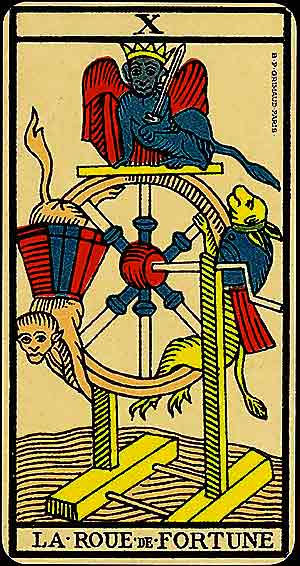 |
1to2 | 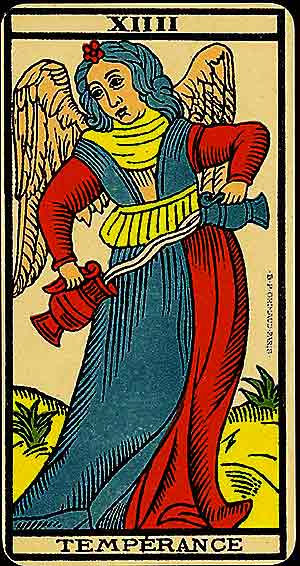 |
1+2 |
 |
 |
P#1 | 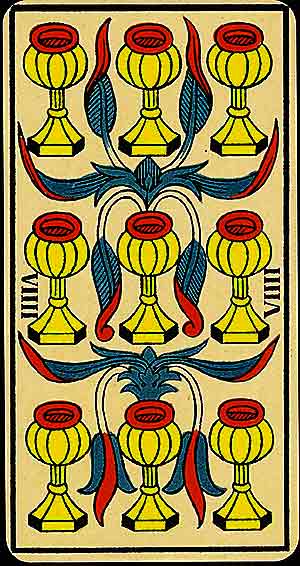 |
 |
||
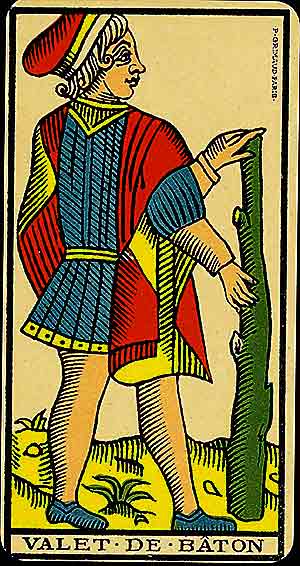 |
1: Person #1
Symbolism:
The Valet of Batons stands confidently, holding a tall baton upright, symbolising youthful energy and curiosity about growth and opportunity. The figure's posture suggests enthusiasm and the beginnings of creative or spiritual endeavours.
Meaning:
The Valet of Batons symbolises youthful enthusiasm, curiosity, and the spark of creativity. This card represents a message or opportunity related to growth, passion, or inspiration. It encourages embracing new experiences and allowing your adventurous spirit to guide you.
In relationships, it may indicate playful energy or the start of something exciting. Spiritually, it reflects the first steps on a creative or inspirational journey.
Keywords:
Curiosity, enthusiasm, exploration, inspiration, passion, opportunity, potential, creativity, messages, adventure.
2: Person #2
Symbolism:
The Roy of Swords sits on a grand throne, gripping a sword with authority, surrounded by minimal decoration to emphasise his focus and intellect. This card represents mastery of logic, clear judgment, and leadership in matters requiring mental precision and fairness.
Meaning:
The King of Swords represents authority, logic, and ethical leadership. He advises using intellect and fairness to make decisions. This card encourages seeking truth and upholding moral integrity.
In relationships, it suggests rational communication and mutual respect. Spiritually, it represents mastery of the mind and the power of clear thought.
Keywords:
Authority, logic, truth, judgment, fairness, intellect, leadership, integrity, clarity, rationality.
3: Person #3
Symbolism:
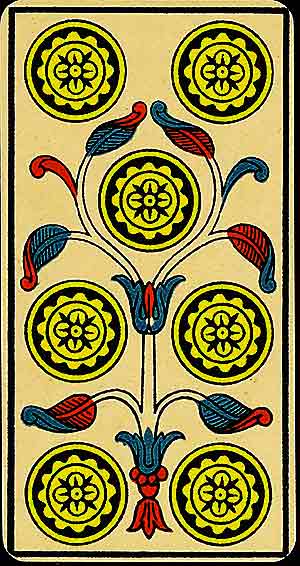
Seven coins are arranged in a slightly uneven yet intentional pattern, adorned with budding leaves, symbolising patience and growth. This card represents long-term investment, reflection on progress, and the anticipation of rewards.
Meaning:
The Seven of Coins represents patience and evaluation of progress. It suggests taking a step back to assess whether one's efforts have been fruitful. There may be a sense of waiting or uncertainty about the outcomes of hard work, but this card encourages perseverance and trusting in the process. It also warns against impatience or becoming too disillusioned with the slow pace of progress.
In relationships, it can signify reassessing the dynamics and questioning whether efforts are being reciprocated. Spiritually, it represents patience and the wisdom of understanding that results take time to manifest.
Keywords:
Patience, evaluation, progress, effort, assessment, perseverance, growth, waiting, dissatisfaction, long-term rewards.
4: Person #1's view of #2
Symbolism:
Nine cups are arranged in a full, symmetrical configuration, with decorative elements emphasising abundance and satisfaction. The design symbolises contentment, emotional fulfilment, and the realisation of personal wishes.
Meaning:
The Nine of Cups is often referred to as the 'wish card', symbolising contentment, emotional satisfaction, and the realisation of desires. It reflects a period of comfort and abundance, encouraging gratitude for blessings received.
In relationships, it signifies harmony and mutual happiness. Spiritually, it highlights the importance of appreciating your journey and celebrating accomplishments.
Keywords:
Contentment, fulfilment, joy, gratitude, abundance, satisfaction, blessings, emotional harmony, celebration, wishes granted.
5: Person #2's view of #3
Symbolism:
Seven cups are arranged in an intricate and slightly asymmetrical pattern, surrounded by flourishing floral designs, hinting at dreams and desires. The card represents choices, imagination, and the allure of possibilities, some of which may be illusory.
Meaning:
The Seven of Cups represents imagination, options, and the challenge of discerning between reality and illusion. It signifies the allure of possibilities and warns against becoming overwhelmed by fantasies or unrealistic expectations.
In relationships, it suggests idealisation or confusion about choices. Spiritually, it reflects the need to ground your aspirations in practicality while staying connected to your vision.
Keywords:
Imagination, options, illusion, temptation, choice, fantasy, dreams, discernment, creativity, vision.
6: Person #3's view of #1
Symbolism:
A single upright baton surrounded by leaves emerges from a hand reaching through a portal, symbolising potential and growth. The floating leaves emphasise vitality and new beginnings, while the portal hints at divine inspiration.
Meaning:
The Ace of Batons heralds the spark of inspiration and the potential for creative or personal growth. It represents an opportunity to take bold action, start new projects, or pursue passions. This card encourages embracing fresh ideas and allowing enthusiasm to guide you.
In relationships, it can signify passion or the beginning of an exciting chapter. Spiritually, it represents awakening and alignment with your creative force.
Keywords:
Inspiration, potential, creativity, passion, action, growth, opportunity, vitality, enthusiasm, new beginnings.
7: Person #2's view of #1
(Tempérance)
Symbolism:
An angelic figure pours water from one cup to another, symbolising balance and the harmonious blending of opposites. One leg is robed in blue, the other in red, reflecting equilibrium between the conscious and subconscious leading to spiritual enlightenment.
Meaning:
Temperance signifies balance, moderation, and the art of blending opposites to create harmony. It encourages patience, self-restraint, and the ability to adapt fluidly to life's changes. This card often appears when you are finding equilibrium in a challenging situation or working toward a greater sense of peace.
In relationships, it suggests compromise and mutual understanding. Spiritually, Temperance represents alignment with your higher self and a focus on unity and integration.
Keywords:
Balance, harmony, moderation, patience, adaptation, unity, self-restraint, healing, integration, peace.
8: Person #3's view of #2
Symbolism:
The Roy of Batons is seated on a sturdy throne, holding a baton with authority, exuding strength and charisma. The card symbolises mastery of creative energy and the ability to inspire and guide others toward success.
Meaning:
The King of Batons represents vision, leadership, and the ability to manifest goals through determination and action. He symbolises authority tempered by creativity and the courage to lead with integrity. This card encourages boldness and a visionary approach to challenges.
In relationships, it suggests mutual respect and the strength of shared ambitions. Spiritually, it reflects mastery over your creative potential and alignment with your purpose.
Keywords:
Leadership, vision, authority, creativity, ambition, mastery, integrity, boldness, inspiration, courage.
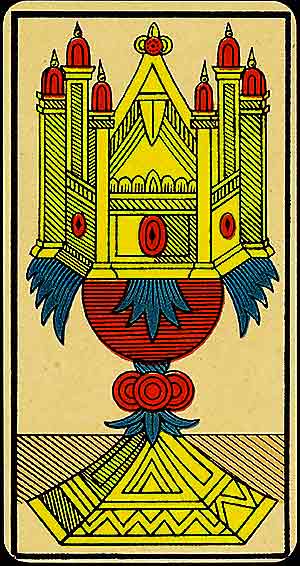
9: Person #1's view of #3
Symbolism:
A single, ornate cup stands at the centre, often crowned with a flowing fountain or delicate embellishments, symbolising abundance and divine inspiration. The card radiates themes of emotional renewal, spiritual connection, and the beginning of fulfilling relationships.
Meaning:
The Ace of Cups represents emotional abundance, new beginnings in relationships, and the outpouring of love and compassion. It signals the birth of deep emotional connections, healing, and a time to open your heart to joy and creativity. This card encourages you to embrace vulnerability and allow emotions to flow freely.
In relationships, it signifies profound intimacy and love. Spiritually, it symbolises divine inspiration and the awakening of the soul to universal love.
Keywords:
Love, new beginnings, emotional abundance, compassion, intimacy, healing, joy, vulnerability, creativity, spiritual awakening.
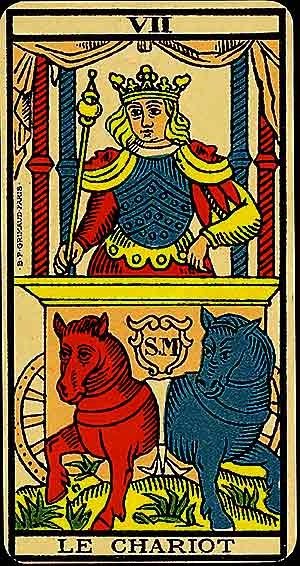
10: Overall relationship between persons #1 and #2
(Le Chariot)
Symbolism:
The Chariot shows a warrior standing in a chariot pulled by two horses of contrasting colors, symbolising opposing forces. The warrior wears a crown and holds a wand or reins, signifying control and determination. The canopy above him suggests moving forward from a place of stability into the unknown.
Meaning:
The Chariot signifies triumph through determination, discipline, and focus. It speaks to mastering conflicting forces and steering your life toward success. This card often appears when you are on the brink of achieving a goal, but it reminds you that persistence and self-control are essential.
In relationships, the Chariot suggests navigating challenges together. Spiritually, it emphasises aligning your willpower with your higher purpose.
Keywords:
Triumph, determination, focus, control, discipline, victory, mastery, momentum, perseverance, alignment.
11: Overall relationship between persons #2 and #3
(Le Diable)
Symbolism:
The Devil is portrayed as a horned figure with two chained human figures below, representing bondage to materialism or desires. The chains are loose, suggesting self-imposed limitations. Their animalistic features symbolise the materialism and polarity of nature.
Meaning:
The Devil represents temptation, materialism, and the shadow side of human nature. It highlights unhealthy attachments, addictions, or fears that may be holding you back. This card calls for awareness and the courage to break free from self-imposed limitations.
In relationships, it warns of codependency or power imbalances. Spiritually, the Devil challenges you to confront and integrate your shadow self.
Keywords:
Temptation, bondage, materialism, addiction, fear, control, power, shadow self, self-awareness, liberation.
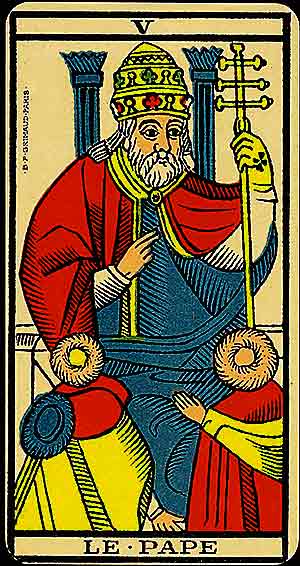
12: Overall relationship between persons #1 and #3
(Le Pape)
Symbolism:
The Hierophant sits between two pillars, with his hand raised in blessing and two followers kneeling before him. He holds a triple cross sceptre, symbolising his spiritual authority. The keys at his feet represent access to higher wisdom and the mysteries of life. His robe and crown emphasise tradition and institutional power.
Meaning:
The Hierophant symbolises tradition, guidance, and spiritual learning. He represents the wisdom passed down through teachings, rituals, and institutions. This card may indicate seeking guidance from a mentor, joining a community, or adhering to established norms. It also encourages you to examine your beliefs and values to ensure they align with your inner truth.
In relationships, the Hierophant suggests shared values and a strong moral foundation. Spiritually, he urges you to connect with divine teachings and the collective wisdom of humanity.
Keywords:
Tradition, guidance, spiritual learning, mentorship, wisdom, community, rituals, institutions, moral alignment, shared values.
13: Overall 3-way Relationship
(La Roue de Fo
Symbolism:
The Wheel of Fortune depicts a large wheel with figures ascending and descending its sides. It symbolises fate, luck, and the cycles of life. The turning motion suggests impermanence and change.
Meaning:
The Wheel of Fortune represents the ever-turning cycles of life, where fortune can rise or fall unexpectedly. This card signals change, opportunity, and the need to adapt. It reminds you to embrace the flow of events and trust in the greater pattern.
In relationships, it can indicate changes or new phases. Spiritually, it highlights the interconnectedness of life and the importance of surrendering to destiny's rhythms while remaining attuned to opportunities that arise.
Keywords:
Change, cycles, destiny, luck, opportunity, karma, adaptability, transition, impermanence, evolution.