 Tarotsmith
 Tarotsmith Shadow Alchemy
 Tarotsmith Horoscopes


Relationship Spread #2
Difficulty: Easy
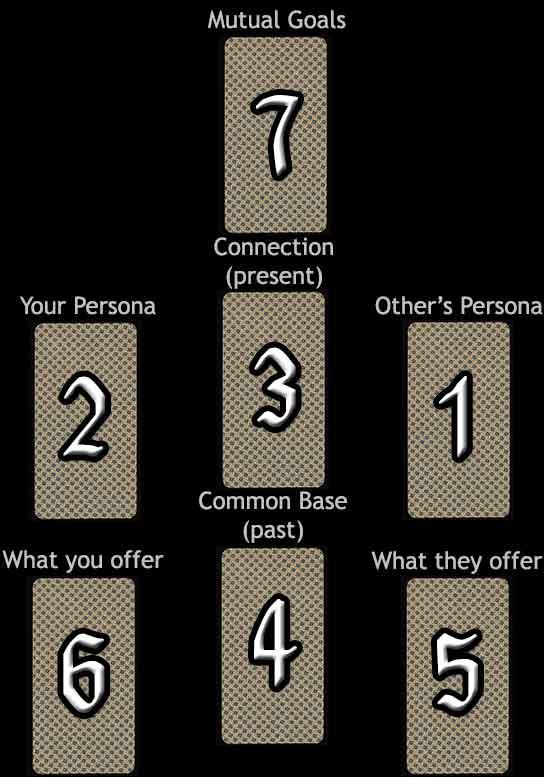
This relationship spread focuses more on the common ground of the relationship, with three cards in the middle column showing the common ground. The middle column essentially displays the past, present, and future of the relationship.
Card #4 stands for the common base of the relationship, which may be thought of as the past events which have shaped their characters, bringing them together. The current connection that binds them together is Card #3, indicating the values shared. Card #7 implies the common goals that would keep the pair together moving into the future.
The columns on either side show what each partner brings to the table. Remember, relationships need not be romantic, and the partners could even be groups rather than individuals. In this layout, the other person is on the left-hand side and the reader on the right.
Cards #1 & #2 indicate the separate personalities of each member of the relationship. These cards form a sort of bridge with the cards beneath them, #5 & #6, which show the qualities that each partner offers the other person, and thus to the relationship as a whole.
Your Relationship #2 Reading
Mutual Goals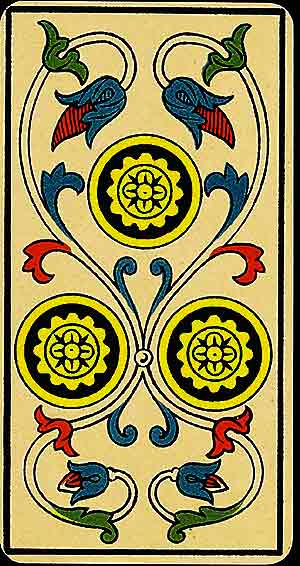 |
||
Your Qualities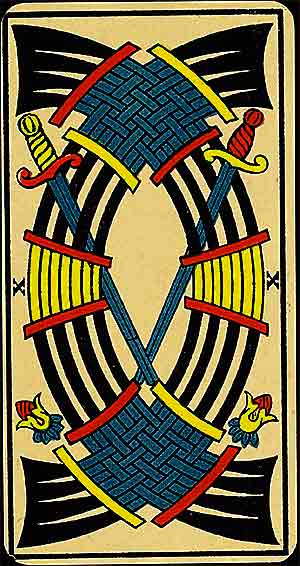 |
Connection (Present)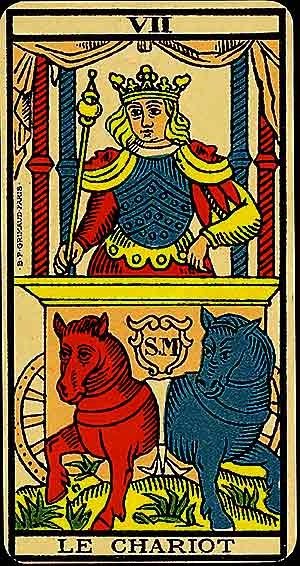 |
Others' Qualities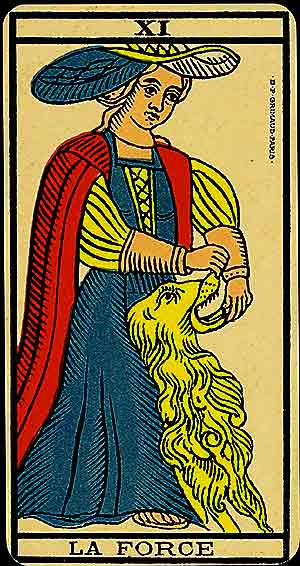 |
What You Bring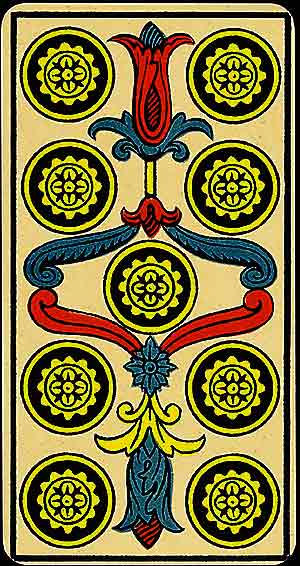 |
Common Base (Past)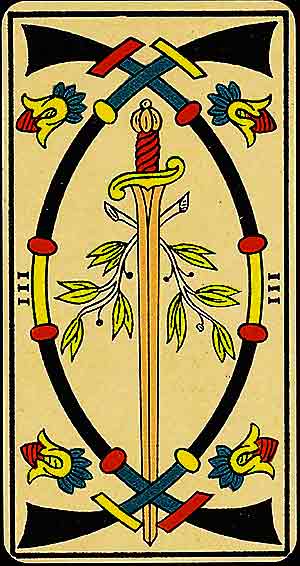 |
What They Bring  |
7: Mutual Goals
Three of Coins
Symbolism:
Three coins are arranged in a triangular pattern, accompanied by simple yet elegant ornamentation, symbolising craftsmanship and collaboration. This card evokes themes of skilful creation, teamwork, and steady progress.
Meaning:
The Three of Coins reflects teamwork, mastery, and collaboration. It highlights the importance of working with others toward a common goal, whether in a creative, financial, or professional endeavour. This card speaks to the satisfaction of seeing one's work valued and appreciated, and it encourages developing one's skills in a collective environment.
In relationships, it indicates a partnership where both individuals contribute their strengths. Spiritually, it represents the process of refining one's craft and the rewards of effort through cooperation.
Keywords:
Teamwork, collaboration, craftsmanship, recognition, mastery, dedication, effort, skill, partnership, accomplishment.
3: Connection
The Chariot
(Le Chariot)
Symbolism:
The Chariot shows a warrior standing in a chariot pulled by two horses of contrasting colors, symbolising opposing forces. The warrior wears a crown and holds a wand or reins, signifying control and determination. The canopy above him suggests moving forward from a place of stability into the unknown.
Meaning:
The Chariot signifies triumph through determination, discipline, and focus. It speaks to mastering conflicting forces and steering your life toward success. This card often appears when you are on the brink of achieving a goal, but it reminds you that persistence and self-control are essential.
In relationships, the Chariot suggests navigating challenges together. Spiritually, it emphasises aligning your willpower with your higher purpose.
Keywords:
Triumph, determination, focus, control, discipline, victory, mastery, momentum, perseverance, alignment.
4: Common Base
Three of Swords
Symbolism:
Three swords intersect, forming a dynamic triangular arrangement, often accompanied by minimal decoration. This design represents conflict, heartache, or the challenging growth that follows emotional or mental pain.
Meaning:
The Three of Swords signifies heartache, betrayal, or grief. It is a card of emotional pain but also serves as a reminder of the healing and growth that follow. This card encourages you to confront and process your pain to move forward.
In relationships, it reflects loss, separation, or betrayal. Spiritually, it emphasises the transformative power of overcoming emotional trials.
Keywords:
Heartbreak, sorrow, betrayal, grief, emotional pain, healing, loss, separation, growth, transformation.
2: Your Qualities
Ten of Swords
Symbolism:
Ten swords create a dramatic and heavy configuration, with sharp points emphasising finality and closure. The card represents the end of a difficult cycle, ultimate surrender, and the potential for new beginnings after hardship.
Meaning:
The Ten of Swords represents endings, betrayal, or collapse. It signifies the conclusion of a painful chapter and the opportunity for a new beginning. This card, while harsh, reminds you that the worst is behind you, and recovery is possible.
In relationships, it can indicate betrayal or the end of a partnership. Spiritually, it symbolises surrender and transformation through acceptance of life's cycles.
Keywords:
Endings, betrayal, collapse, release, transformation, surrender, painful closure, renewal, recovery, acceptance.
1: Their Qualities
Strength
(La Force)
Symbolism:
A serene figure, often a woman, gently tames a lion by holding its jaws open. Her calm demeanour contrasts with the lion's ferocity, symbolising mastery of inner strength. Above her head, the infinity symbol signifies limitless power and spiritual resilience. The image evokes vitality and harmony with nature.
Meaning:
Strength represents courage, compassion, and the balance between force and gentleness. This card embodies inner fortitude, suggesting that true power comes from patience, understanding, and self-discipline rather than brute force. It often appears in situations requiring emotional resilience or the taming of one's impulses.
In relationships, it signifies the power of kindness and understanding. Spiritually, Strength encourages connecting with your inner courage and finding peace amidst challenges.
Keywords:
Inner strength, courage, patience, compassion, resilience, self-discipline, confidence, harmony, emotional balance, fortitude.
6: What You Bring
Nine of Coins
5: What They Bring
Six of Cups
Symbolism:
Six cups are symmetrically aligned, interwoven with flourishing leaves or flowers, signifying nostalgia and harmonious emotions. The imagery suggests a return to past joys, innocence, or the exchange of heartfelt kindness.
Meaning:
The Six of Cups symbolises nostalgia, innocence, and the joy of revisiting the past. It reflects happy memories, generosity, and the simplicity of pure emotional connections. This card encourages embracing the wisdom of your past while staying present.
In relationships, it may suggest a bond rooted in history or the rekindling of old connections. Spiritually, it calls for a return to childlike wonder and openness.
Keywords:
Nostalgia, innocence, joy, generosity, childhood, memories, emotional connection, simplicity, kindness, openness.