 Tarotsmith
 Tarotsmith Shadow Alchemy
 Tarotsmith Horoscopes


Game Plan Spread
Difficulty: Easy
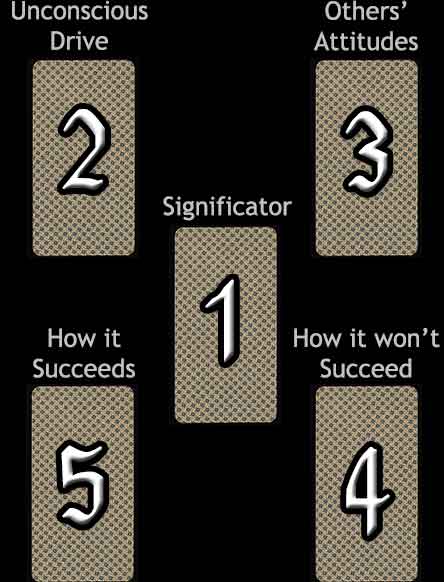
When a person has a certain plan in mind, this simple five-card spread presents a choice, hinting at what action or attitude should be taken for their plan to succeed, and what should be avoided to help the plan work out for the best.
The initial card is laid in the centre of the layout, the significator. The following four cards are laid out clockwise around the significator.
In this spread, the second card is about what drives the reader, but also says they are not fully conscious of this, perhaps even completely unaware of it. It provides a hint as to the reason they strive for their goal.
The third card uncovers what others think of the reader and their goals. The reader may or may not be aware of this. Sometimes other people factor into the plans (and sometimes they don't).
The fourth card suggests what not to do. If things are permitted to go down this path, the plan will collapse.
The fifth card is a hint as to how to make this plan work out favourably. The idea this card presents should be followed to make the plan successful. It is the differences between Cards #4 & #5 that should be noted, as the differences provide important clues.
Your Game Plan Reading
Unconscious Drive Six of Cups |
External Influences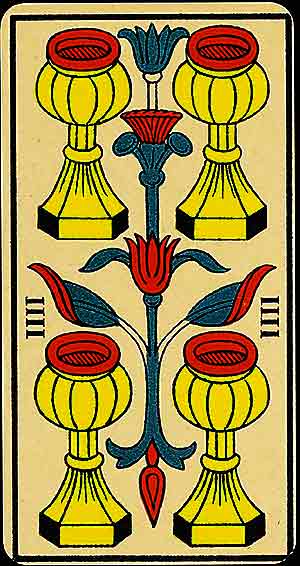 Four of Cups |
|
Significator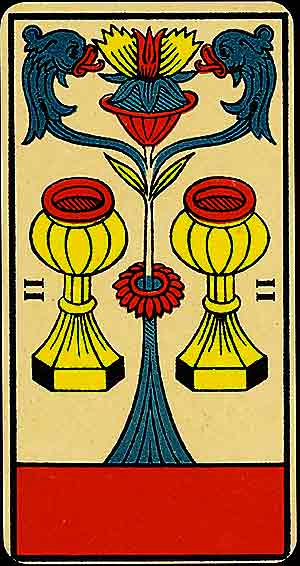 Deuce of Cups |
||
How it Will Succeed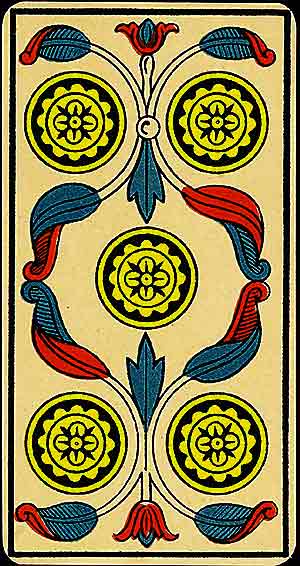 Five of Coins |
How it Will Not Succeed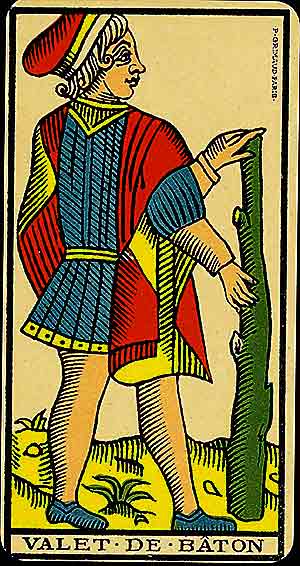 Valet of Batons |
Deuce of Cups
Symbolism:
Two elegant cups face one another, often connected by floral motifs or a shared ornament, symbolising harmony and partnership. The balanced arrangement reflects unity, mutual understanding, and the joy of connection.
Meaning:
The Two of Cups symbolises partnerships, unity, and mutual respect. It highlights emotional and spiritual connections, often in the form of love, friendship, or collaboration. This card suggests balance and equality, emphasising the importance of giving and receiving in harmony.
In relationships, it signifies a deep bond, often romantic but not exclusively. Spiritually, it reflects the balance between inner and outer worlds or the union of opposing forces.
Keywords:
Union, partnership, love, harmony, balance, connection, mutual respect, cooperation, intimacy, equality.
Six of Cups
Symbolism:
Six cups are symmetrically aligned, interwoven with flourishing leaves or flowers, signifying nostalgia and harmonious emotions. The imagery suggests a return to past joys, innocence, or the exchange of heartfelt kindness.
Meaning:
The Six of Cups symbolises nostalgia, innocence, and the joy of revisiting the past. It reflects happy memories, generosity, and the simplicity of pure emotional connections. This card encourages embracing the wisdom of your past while staying present.
In relationships, it may suggest a bond rooted in history or the rekindling of old connections. Spiritually, it calls for a return to childlike wonder and openness.
Keywords:
Nostalgia, innocence, joy, generosity, childhood, memories, emotional connection, simplicity, kindness, openness.
Four of Cups
Symbolism:
Four cups form a stable square, often surrounded by simpler decorative elements, representing introspection and emotional stability. The symmetry suggests contemplation or a period of emotional stagnation, urging reflection.
Meaning:
The Four of Cups represents introspection, apathy, or dissatisfaction. It suggests a need to re-evaluate your emotional state and consider opportunities you may be ignoring. This card warns against closing yourself off due to disillusionment or complacency.
In relationships, it reflects emotional distance or the need to reconnect. Spiritually, it calls for mindfulness and gratitude to rediscover meaning and purpose.
Keywords:
Introspection, apathy, discontent, emotional re-evaluation, opportunity, mindfulness, detachment, dissatisfaction, contemplation, stagnation.
Valet of Batons
Symbolism:
The Valet of Batons stands confidently, holding a tall baton upright, symbolising youthful energy and curiosity about growth and opportunity. The figure's posture suggests enthusiasm and the beginnings of creative or spiritual endeavours.
Meaning:
The Valet of Batons symbolises youthful enthusiasm, curiosity, and the spark of creativity. This card represents a message or opportunity related to growth, passion, or inspiration. It encourages embracing new experiences and allowing your adventurous spirit to guide you.
In relationships, it may indicate playful energy or the start of something exciting. Spiritually, it reflects the first steps on a creative or inspirational journey.
Keywords:
Curiosity, enthusiasm, exploration, inspiration, passion, opportunity, potential, creativity, messages, adventure.
Five of Coins
Symbolism:
Five coins create an irregular arrangement, with sparse decoration reflecting struggle or imbalance. This card symbolises financial hardship, instability, and the opportunity to find support during challenging times.
Meaning:
The Five of Coins represents financial loss, scarcity, or hardship. It reflects feelings of isolation or being "shut out" from security or comfort. However, this card also offers the reminder that help is often available if one is willing to seek it, whether in the form of external support or a change in mindset.
In relationships, it indicates feelings of neglect or abandonment. Spiritually, it encourages reaching out for support and reframing one's perspective on hardship to find hope in the darkest times.
Keywords:
Loss, scarcity, hardship, abandonment, isolation, financial struggle, poverty, lack, seeking help, resilience.