 Tarotsmith
 Tarotsmith Shadow Alchemy
 Tarotsmith Horoscopes

Celtic Cross Spread
Difficulty: Average
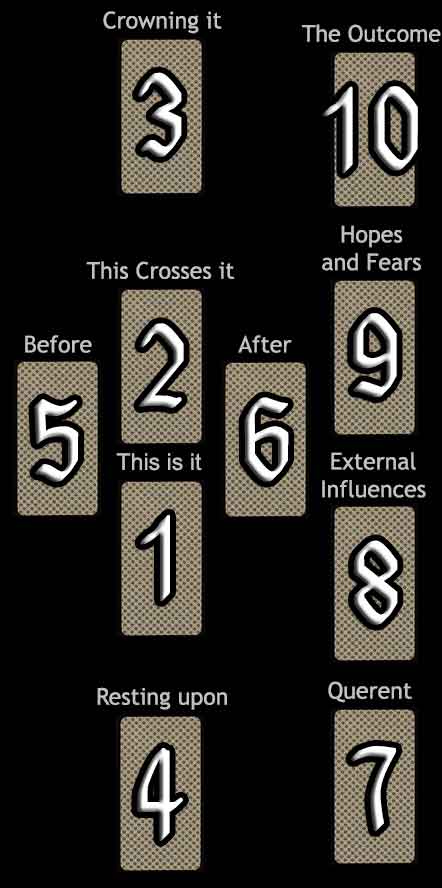
This is probably the most well-known tarot spread. A good, basic spread for beginners to practise with, the Celtic Cross is useful for questions of all types. In this spread, it can be helpful to notice the relationships between the pairings of cards #5 & #9, #1 & #2, #3 & #4, and #6 & #10.
- The significator epitomizes what the reading deals with, the initial situation.
- An added impulse that compounds the significator, which may be either complimentary or contradictory.
- This is what is consciously known (thoughts).
- Unconscious driving forces that may not be known fully (emotions).
- The immediate past regarding the current situation.
- The first future card indicates the immediate future.
- This card represents the reader and their attitude towards cards #1 and #2.
- The external influences, the places and people which influence the topic.
- This tarot card suggests expectations; what is secretly hoped for or feared.
- The second future card reveals the long-term outcome.
Your Celtic Cross Reading
The Crown |
The Outcome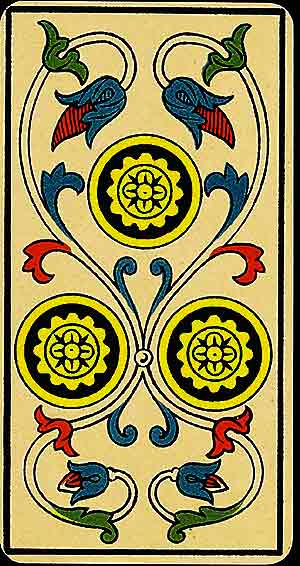 Three of Coins
External Forces  Four of Coins
|
||
The Recent Past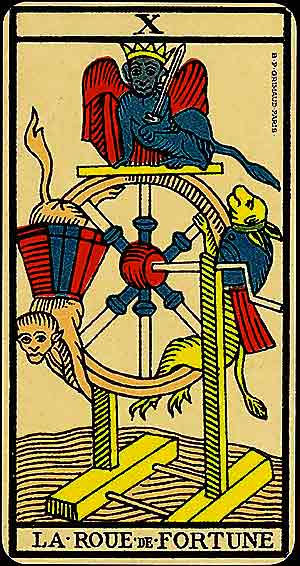 The Wheel of Fortune (La Roue de Fo |
The Crossing Card
|
The Future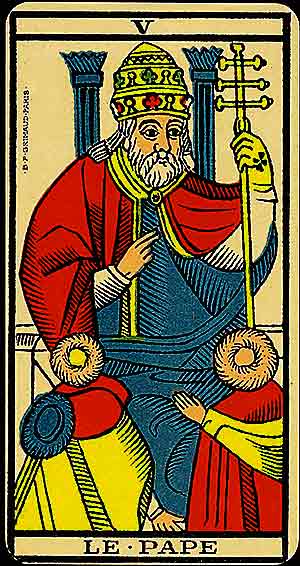 The Hierophant (Le Pape) |
|
|
|||
The Significator represents what the main theme of the reading deals with, the initial situation.
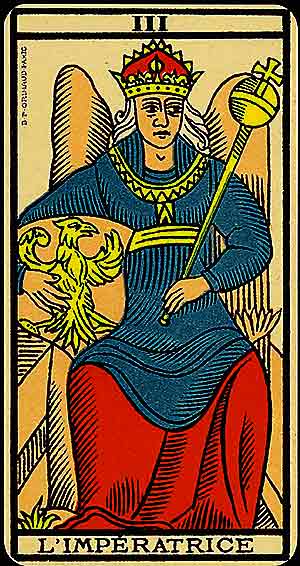
The Empress
(L'Impératri
Symbolism:
The Empress sits on her throne, holding a scepter that signifies authority. A shield bearing the symbol of Venus is nearby, emphasising love, fertility, and creation. She is adorned in flowing robes, indicating abundance.
Meaning:
The Empress is the archetype of creation and abundance, representing fertility, nurturing, and growth in all aspects of life. She is a motherly figure who provides support and encouragement, guiding you to cultivate your ideas or relationships into something beautiful. Her presence suggests a time of prosperity and fulfilment.
In relationships, she signifies a loving, nurturing connection. Spiritually, she urges you to embrace the rhythms of nature and the divine feminine within you, celebrating life's creative energy.
Keywords:
Creation, abundance, fertility, nurturing, growth, love, prosperity, nature, creativity, fulfilment.
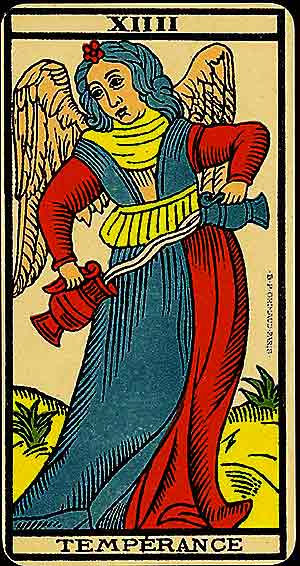
The Crossing Card denotes an added impulse that compounds the initial card, whether complimentary or contradictory.
Temperance
(Tempérance)
Symbolism:
An angelic figure pours water from one cup to another, symbolising balance and the harmonious blending of opposites. One leg is robed in blue, the other in red, reflecting equilibrium between the conscious and subconscious leading to spiritual enlightenment.
Meaning:
Temperance signifies balance, moderation, and the art of blending opposites to create harmony. It encourages patience, self-restraint, and the ability to adapt fluidly to life's changes. This card often appears when you are finding equilibrium in a challenging situation or working toward a greater sense of peace.
In relationships, it suggests compromise and mutual understanding. Spiritually, Temperance represents alignment with your higher self and a focus on unity and integration.
Keywords:
Balance, harmony, moderation, patience, adaptation, unity, self-restraint, healing, integration, peace.
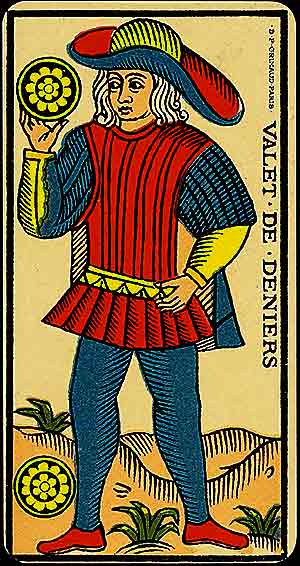
The Crown stands for what the asker is aware of consciously.
Valet of Coins
Symbolism:
The Valet of Coins holds a single coin, gazing at it with curiosity or reverence, symbolising the pursuit of knowledge and potential in material matters. The figure's youthful demeanour reflects themes of learning, new opportunities, and the beginning stages of financial or practical growth.
Meaning:
The Valet of Coins represents curiosity and the pursuit of knowledge in the material world. It signifies a willingness to learn and grow in financial or practical matters. This card urges exploration of new opportunities, particularly in the areas of career, studies, or investments, and highlights the importance of diligence in taking the first steps toward prosperity.
In relationships, it suggests new beginnings based on mutual growth and shared ambitions. Spiritually, it reflects the eager pursuit of knowledge that leads to material success.
Keywords:
Curiosity, learning, practicality, opportunities, growth, ambition, diligence, exploration, material world, new beginnings.
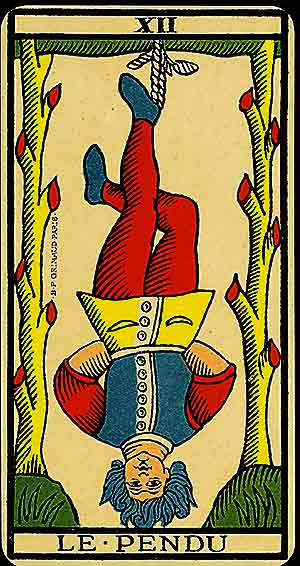
Foundation card reveals unconscious driving forces that the querent may not be aware of.
The Hanged Man
(Le Pendu)
Symbolism:
The Hanged Man is shown suspended upside-down by one foot from a live tree, with his free leg bent to form a cross-like shape. His serene expression suggests surrender rather than distress. This represents enlightenment gained through sacrifice or altered perspective. The tree may symbolise the axis mundi, a bridge between worlds.
Meaning:
The Hanged Man symbolises surrender, letting go, and viewing situations from a different perspective. It suggests a pause or suspension of action, encouraging reflection and patience. This card often appears when you need to relinquish control or embrace sacrifice to gain deeper understanding.
In relationships, it can signal a need for a fresh outlook or willingness to adapt. Spiritually, it points to awakening through non-resistance and the acceptance of higher truths.
Keywords:
Surrender, perspective, patience, sacrifice, reflection, letting go, enlightenment, suspension, adaptation, non-resistance.
The Recent Past represents past events and concerns.
The Wheel of Fortune
(La Roue de Fo
Symbolism:
The Wheel of Fortune depicts a large wheel with figures ascending and descending its sides. It symbolises fate, luck, and the cycles of life. The turning motion suggests impermanence and change.
Meaning:
The Wheel of Fortune represents the ever-turning cycles of life, where fortune can rise or fall unexpectedly. This card signals change, opportunity, and the need to adapt. It reminds you to embrace the flow of events and trust in the greater pattern.
In relationships, it can indicate changes or new phases. Spiritually, it highlights the interconnectedness of life and the importance of surrendering to destiny's rhythms while remaining attuned to opportunities that arise.
Keywords:
Change, cycles, destiny, luck, opportunity, karma, adaptability, transition, impermanence, evolution.
The Future depicts that which lies ahead.
Temperance
(Tempérance)
Symbolism:
An angelic figure pours water from one cup to another, symbolising balance and the harmonious blending of opposites. One leg is robed in blue, the other in red, reflecting equilibrium between the conscious and subconscious leading to spiritual enlightenment.
Meaning:
Temperance signifies balance, moderation, and the art of blending opposites to create harmony. It encourages patience, self-restraint, and the ability to adapt fluidly to life's changes. This card often appears when you are finding equilibrium in a challenging situation or working toward a greater sense of peace.
In relationships, it suggests compromise and mutual understanding. Spiritually, Temperance represents alignment with your higher self and a focus on unity and integration.
Keywords:
Balance, harmony, moderation, patience, adaptation, unity, self-restraint, healing, integration, peace.
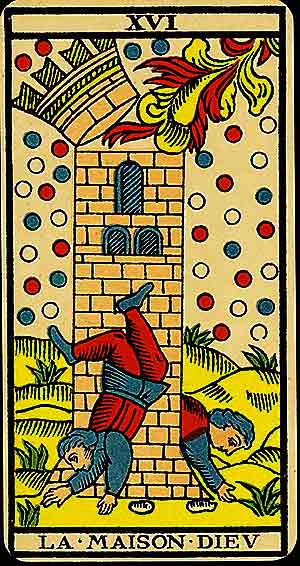
The Querent represents the asker and their attitude towards the subject of the reading.
The Tower
(La Maison Dieu)
Symbolism:
A tall tower struck by lightning collapses as figures fall from its heights, symbolising sudden upheaval. Balls and debris erupt from the structure, representing destruction and chaos. However, the lightning bolt signifies divine intervention, clearing away illusions and false foundations to reveal the truth.
Meaning:
The Tower represents sudden change, upheaval, and the collapse of false structures. While the experience may be shocking or painful, it paves the way for transformation and rebuilding. This card calls for resilience and the ability to embrace new beginnings born from chaos.
In relationships, it may signal a dramatic shift or revelation. Spiritually, it urges you to let go of false beliefs and align with authenticity.
Keywords:
Upheaval, change, chaos, destruction, revelation, transformation, truth, divine intervention, awakening, rebuilding.
External Forces represents the influence of others in your life as well as trends in your relationships with others.
Four of Coins
Symbolism:
Four coins form a square or balanced arrangement, surrounded by minimal decorative elements, representing stability and security. The imagery suggests a strong foundation in material matters but cautions against rigidity or hoarding.
Meaning:
The Four of Coins symbolises security, stability, and material control, but also warns against hoarding or being overly protective of one's resources. While it can signify financial stability and successful accumulation of wealth, it also warns against becoming too attached to material things, leading to stagnation or fear of change.
In relationships, it suggests possessiveness or controlling behaviour. Spiritually, it calls for letting go of attachment to material possessions and finding balance in one's relationship with the material world.
Keywords:
Security, stability, control, possession, greed, materialism, hoarding, attachment, wealth, fear of loss.
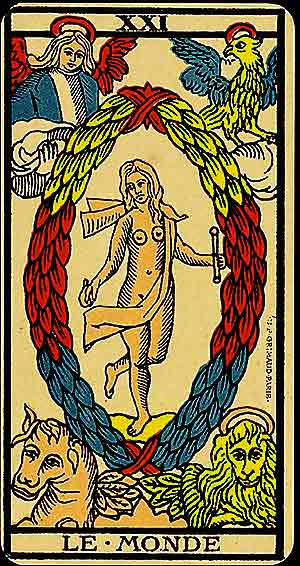
Hopes and Fears shows the expectations you have concerning the outcome of your question.
The World
(Le Monde)
Symbolism:
Symbolism:
A dancing figure surrounded by a wreath occupies the center, representing completion and harmony. The four corners of the card feature symbols of the elements or the four cherubs, signifying unity. The figure holds wands or batons, symbolising mastery and balance.
Meaning:
The World signifies completion, fulfilment, and wholeness. It represents the successful culmination of a journey and the integration of all aspects of your life. This card invites you to celebrate your achievements while embracing the interconnectedness of existence. It heralds a time of balance, unity, and alignment with your purpose. The World also indicates readiness for new adventures following the conclusion of one phase.
In relationships, it signifies harmony and mutual understanding. Spiritually, it reflects enlightenment and integration with the cosmos.
Keywords:
Completion, fulfilment, harmony, unity, wholeness, success, integration, achievement, enlightenment, new beginnings.
The Outcome of your question. Interpret this card in the context of the entire reading and as an indicator of the path you are currently on, but not necessarily bound to.
Three of Coins
Symbolism:
Three coins are arranged in a triangular pattern, accompanied by simple yet elegant ornamentation, symbolising craftsmanship and collaboration. This card evokes themes of skilful creation, teamwork, and steady progress.
Meaning:
The Three of Coins reflects teamwork, mastery, and collaboration. It highlights the importance of working with others toward a common goal, whether in a creative, financial, or professional endeavour. This card speaks to the satisfaction of seeing one's work valued and appreciated, and it encourages developing one's skills in a collective environment.
In relationships, it indicates a partnership where both individuals contribute their strengths. Spiritually, it represents the process of refining one's craft and the rewards of effort through cooperation.
Keywords:
Teamwork, collaboration, craftsmanship, recognition, mastery, dedication, effort, skill, partnership, accomplishment.