 Tarotsmith
 Tarotsmith Shadow Alchemy
 Tarotsmith Horoscopes



Blind Spot Spread
Difficulty: Varies
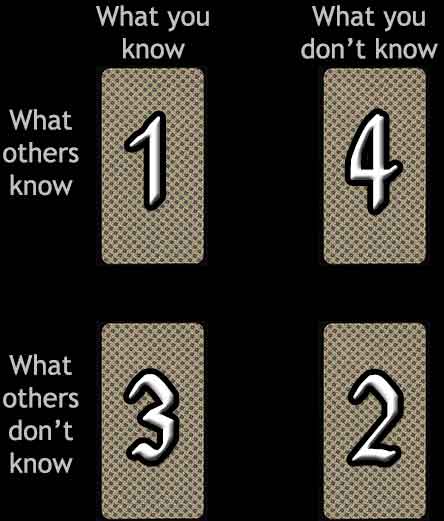
This tarot spread is used to enhance self-awareness. Questions about learning something about oneself or things that are hidden work very well with this tarot spread, although no question is necessary.
- This tarot card displays the obvious identity, the part of oneself that is consciously known and projected to others.
- This card indicates unconscious driving forces that neither the reader nor others are aware of about them, the great unknown. Nobody knows what this tarot card means, at least not yet...
- The part of oneself that is concealed, to keep others from discovering, is apparent in this card.
- This is the Blind Spot. This is what was asked about, that which this reading should bring awareness of. The reader may wish to pay close attention to these mannerisms.
Your Blind Spot Reading
| What you know | What you don't know | |
| What others know | 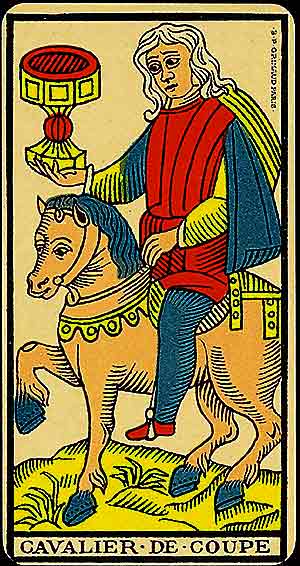 Knight of Cups |
 The Hermit (L'Hermite) |
| What others don't know | 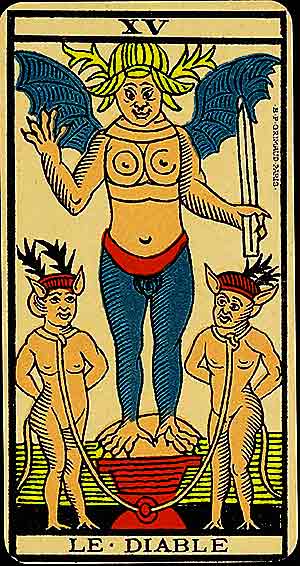 The Devil (Le Diable) |
 Queen of Swords |
This card displays your obvious identity, the part of you that everyone knows.
Knight of Cups
Symbolism:
The Cavalier of Cups is shown riding a steady horse, holding a cup as if offering or presenting it, symbolising emotional pursuit and romantic ideals. The card reflects themes of charm, devotion, and the quest for emotional or creative fulfilment.
Meaning:
The Knight of Cups represents romance, charm, and the pursuit of emotional or artistic goals. It suggests taking action based on intuition and feelings, but warns against overidealizing or being overly passive.
In relationships, it indicates a romantic approach or a deepening of emotional bonds. Spiritually, it highlights the importance of aligning your actions with your heart's desires.
Keywords:
Romance, charm, idealism, emotional pursuit, creativity, intuition, action, inspiration, deepening bonds, heartfelt journeys.
This card shows unconscious driving forces that neither you nor your company is aware of about you. This is the Great Unknown.
Queen of Swords
Symbolism:
The Rayne of Swords is seated regally, holding a sword upright in one hand, often forward with an air of clarity and focus. The card symbolises wisdom, discernment, and the ability to make fair yet firm decisions based on logic and truth.
Meaning:
The Queen of Swords embodies intellect, honesty, and independence. She advises clear communication and setting boundaries. This card encourages blending compassion with logic, and facing situations with maturity and truth.
In relationships, it reflects fairness and emotional clarity. Spiritually, it represents wisdom gained through life's challenges.
Keywords:
Wisdom, clarity, independence, honesty, discernment, boundaries, intellect, maturity, truth, fairness.
The secrets you keep from others are shown by this card.
The Devil
(Le Diable)
Symbolism:
The Devil is portrayed as a horned figure with two chained human figures below, representing bondage to materialism or desires. The chains are loose, suggesting self-imposed limitations. Their animalistic features symbolise the materialism and polarity of nature.
Meaning:
The Devil represents temptation, materialism, and the shadow side of human nature. It highlights unhealthy attachments, addictions, or fears that may be holding you back. This card calls for awareness and the courage to break free from self-imposed limitations.
In relationships, it warns of codependency or power imbalances. Spiritually, the Devil challenges you to confront and integrate your shadow self.
Keywords:
Temptation, bondage, materialism, addiction, fear, control, power, shadow self, self-awareness, liberation.
This is your Blind Spot. This is what you asked about – what you wished to be made aware of by this reading.
The Hermit
(L'Hermite)
Symbolism:
The Hermit is an elderly figure carrying a lantern and a staff. The lantern symbolises inner wisdom and guidance, while the staff represents support and stability. His cloak signifies introspection, reflecting the solitude of his journey.
Meaning:
The Hermit represents introspection, wisdom, and solitude. He invites you to step back from external distractions and seek answers within. This card often appears during periods of self-discovery, encouraging you to listen to your inner voice.
In relationships, the Hermit may indicate a need for personal space or reflection. Spiritually, it highlights the quest for enlightenment and the value of solitary contemplation.
Keywords:
Wisdom, introspection, solitude, guidance, reflection, self-discovery, enlightenment, patience, inner truth, retreat.