 Tarotsmith
 Tarotsmith Shadow Alchemy
 Tarotsmith Horoscopes


Ankh Spread
Difficulty: Kind of tough
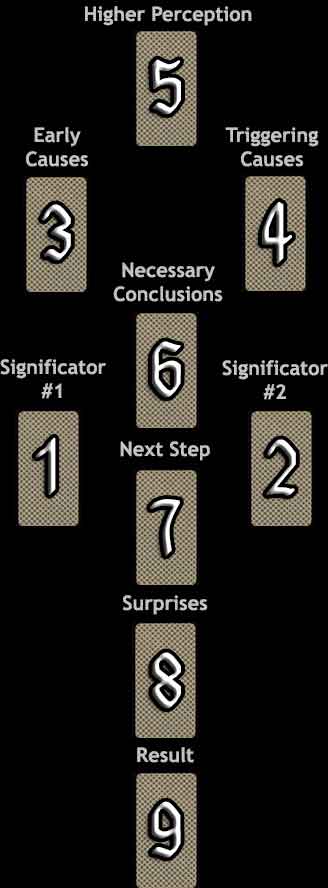
The Ankh Spread is for questions about the causes behind trends. It is similar to the Celtic Cross and Secret of the High Priestess spreads, but it covers the reasons behind the circumstances in question differently, perhaps giving a better explanation of why things are the way they are.
The loop of the upper section of the ankh reveals the spiritual background and causes of the situation, while the stem of the base focuses on prospects for the outcome.
The first two tarot cards represent the two parent causes of the situation. They will either complement each other or show two opposing sides of a conflict, depending on how they relate. These are the significator cards of the Ankh spread.
3. This tarot card shines light upon the early causes of the trend in question.
4. Pinpoints the causes that triggered the current situation.
5. Reveals the spiritual perspective of the subject at hand.
6. This card examines the reasons why this course of action had to unfold, as a means to this end.
At this point, it is good to pause to soak in the meaning of the first six cards before moving forward to the last three cards. The last three reveal prospects for the future.
7. The Next Step gives clues about the immediate future.
8. Surprising Experiences encountered en route to the result.
9. This represents the result.
Your Ankh Reading
| Early Causes | Higher Perceptions 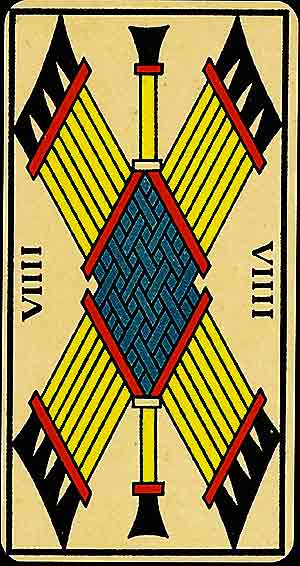 Nine of Batons |
Triggering Causes |
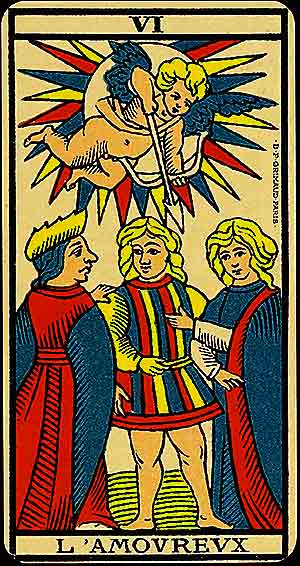 The Lovers (L'Amoureux) |
Necessary Conclusions | 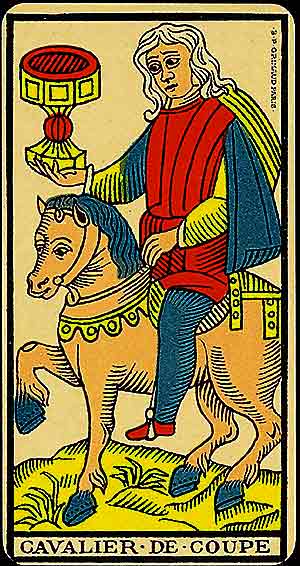 Knight of Cups |
| Significator #1 | 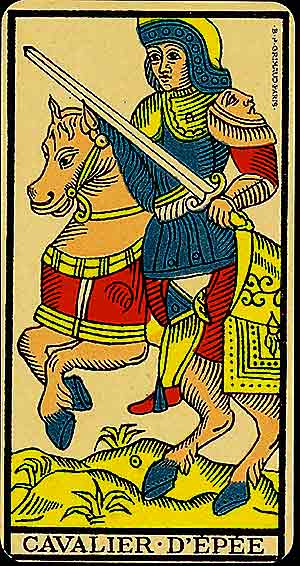 Knight of Swords |
Significator #2 |
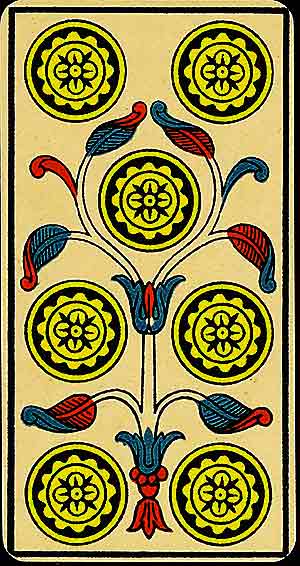 Seven of Coins |
Next Step | 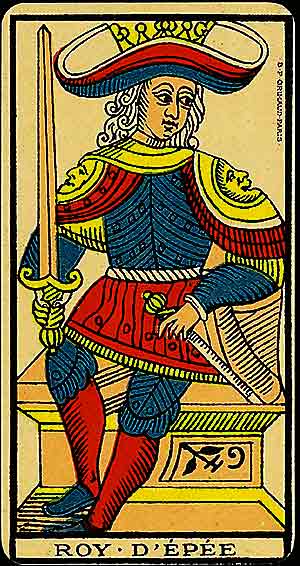 King of Swords |
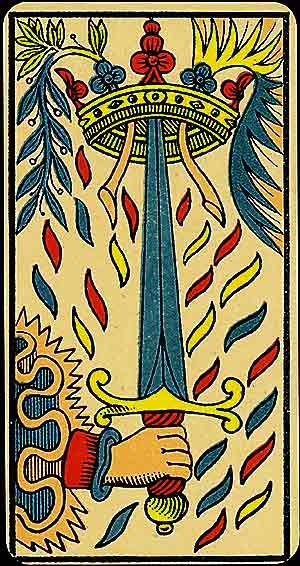 Ace of Swords |
||
Surprising Experiences 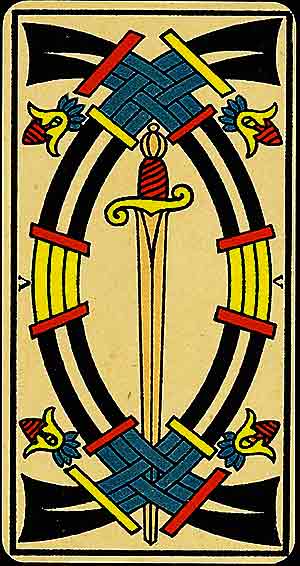 Five of Swords |
||
Outcome 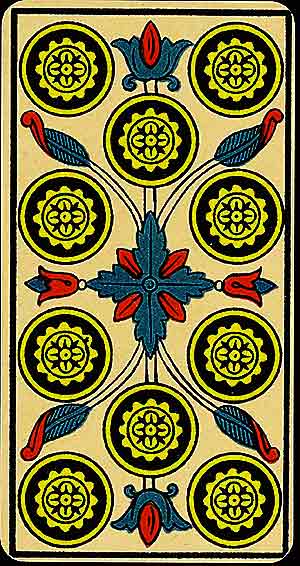 Ten of Coins |
Significator #1
Seven of Coins
Symbolism:
Seven coins are arranged in a slightly uneven yet intentional pattern, adorned with budding leaves, symbolising patience and growth. This card represents long-term investment, reflection on progress, and the anticipation of rewards.
Meaning:
The Seven of Coins represents patience and evaluation of progress. It suggests taking a step back to assess whether one's efforts have been fruitful. There may be a sense of waiting or uncertainty about the outcomes of hard work, but this card encourages perseverance and trusting in the process. It also warns against impatience or becoming too disillusioned with the slow pace of progress.
In relationships, it can signify reassessing the dynamics and questioning whether efforts are being reciprocated. Spiritually, it represents patience and the wisdom of understanding that results take time to manifest.
Keywords:
Patience, evaluation, progress, effort, assessment, perseverance, growth, waiting, dissatisfaction, long-term rewards.
Significator #2
King of Swords
Symbolism:
The Roy of Swords sits on a grand throne, gripping a sword with authority, surrounded by minimal decoration to emphasise his focus and intellect. This card represents mastery of logic, clear judgment, and leadership in matters requiring mental precision and fairness.
Meaning:
The King of Swords represents authority, logic, and ethical leadership. He advises using intellect and fairness to make decisions. This card encourages seeking truth and upholding moral integrity.
In relationships, it suggests rational communication and mutual respect. Spiritually, it represents mastery of the mind and the power of clear thought.
Keywords:
Authority, logic, truth, judgment, fairness, intellect, leadership, integrity, clarity, rationality.
Early Causes
The Lovers
(L'Amoureux)
Symbolism:
The Lovers card depicts a man standing between two women, with Cupid above aiming an arrow. The scene suggests a choice or a union, with the women often representing opposing influences. In some interpretations, the figures are Adam and Eve, symbolising the duality of earthly and spiritual love.
Meaning:
The Lovers represent connection, harmony, and the power of choice. This card speaks to deep relationships, whether romantic or platonic, and the alignment of values and goals. However, it also highlights the necessity of making meaningful decisions, often at a crossroads where the heart and mind must collaborate.
In relationships, the Lovers symbolise love, commitment, and mutual respect. Spiritually, they encourage balancing the dualities within yourself and finding unity in diversity.
Keywords:
Love, harmony, connection, choice, duality, relationships, unity, attraction, alignment, crossroads.
Triggering Causes
Knight of Cups
Symbolism:
The Cavalier of Cups is shown riding a steady horse, holding a cup as if offering or presenting it, symbolising emotional pursuit and romantic ideals. The card reflects themes of charm, devotion, and the quest for emotional or creative fulfilment.
Meaning:
The Knight of Cups represents romance, charm, and the pursuit of emotional or artistic goals. It suggests taking action based on intuition and feelings, but warns against overidealizing or being overly passive.
In relationships, it indicates a romantic approach or a deepening of emotional bonds. Spiritually, it highlights the importance of aligning your actions with your heart's desires.
Keywords:
Romance, charm, idealism, emotional pursuit, creativity, intuition, action, inspiration, deepening bonds, heartfelt journeys.
Higher Perceptions
Nine of Batons
Symbolism:
Nine batons are intricately arranged, with leaves flourishing despite their dense configuration, reflecting endurance and protection. The design suggests a moment of pause before completion, highlighting strength and resilience.
Meaning:
The Nine of Batons represents perseverance, resilience, and the ability to endure despite setbacks. It reflects a period of testing and the need to protect what you've built. This card encourages vigilance and inner strength, reminding you that the final stretch of a challenge often feels the most difficult.
In relationships, it suggests enduring hardships together or remaining cautious. Spiritually, it calls for faith in your ability to withstand trials.
Keywords:
Perseverance, resilience, endurance, defence, vigilance, struggle, inner strength, caution, determination, resolve.
Necessary Conclusions
Knight of Swords
Symbolism:
The Cavalier of Swords pulls his horse up onto two legs, with a raised sword indicating action and decisiveness. The dynamic imagery evokes themes of boldness, quick thinking, and the pursuit of challenges with mental and physical agility.
Meaning:
The Knight of Swords represents action, ambition, and the pursuit of goals with determination. It encourages boldness but warns against recklessness or being too impulsive. This card suggests moving quickly to overcome obstacles but maintaining focus.
In relationships, it may signal a fast-moving connection or conflict resolution. Spiritually, it reflects the quest for truth and higher understanding.
Keywords:
Ambition, determination, action, boldness, impulsiveness, focus, pursuit, courage, urgency, resolution.
The Next Step
Ace of Swords
Symbolism:
A single, upright sword dominates the design, often crowned with laurels or floral motifs, symbolising clarity and power. This card evokes themes of mental focus, decisive action, and the emergence of truth.
Meaning:
The Ace of Swords signifies a breakthrough, clarity of thought, or the beginning of intellectual endeavours. It heralds a new phase where truth, logic, and reason will guide your actions. This card encourages decisiveness, honesty, and a commitment to facing challenges with integrity.
In relationships, it may suggest open communication or a new understanding. Spiritually, it represents cutting through illusions to achieve enlightenment.
Keywords:
Clarity, breakthrough, truth, mental focus, logic, decisiveness, honesty, intellectual pursuit, triumph, communication.
Surprises
Five of Swords
Symbolism:
Five swords create a more irregular arrangement, their sharp points emphasising conflict or struggle. The design reflects themes of tension, competition, and the potential for discord or loss.
Meaning:
The Five of Swords represents conflict, betrayal, or hollow victories. It suggests a situation where winning comes at the expense of others or personal values. This card warns against manipulation or dishonourable actions and invites reflection on ethical choices.
In relationships, it may indicate arguments or feelings of alienation. Spiritually, it highlights the importance of integrity in the face of challenges.
Keywords:
Conflict, betrayal, hollow victory, loss, manipulation, moral ambiguity, dishonour, reflection, ethical choices, tension.
The Outcome
Ten of Coins
Symbolism:
Ten coins form a complex and interconnected pattern, adorned with rich, intricate designs that symbolise legacy and wealth. The imagery reflects lasting success, generational stability, and the fulfilment of long-term goals.
Meaning:
The Ten of Coins represents wealth, legacy, and long-term security. It signifies the culmination of efforts to build a stable, prosperous life for oneself and future generations. This card speaks to the material rewards that come from planning and sustained effort over time, especially in the realms of family, heritage, and financial stability.
In relationships, it highlights the importance of family, tradition, and long-term commitments. Spiritually, it represents the fulfilment of material goals and the creation of a lasting legacy.
Keywords:
Legacy, wealth, family, security, prosperity, tradition, stability, inheritance, culmination, long-term success.