 Tarotsmith
 Tarotsmith Shadow Alchemy
 Tarotsmith Horoscopes

Relationship Spread #2
Difficulty: Easy
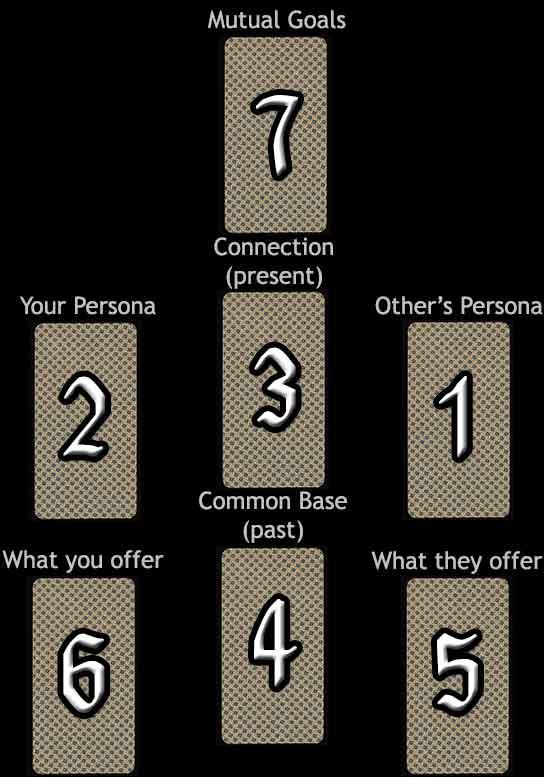
This relationship spread focuses more on the common ground of the relationship, with three cards in the middle column showing the common ground. The middle column essentially displays the past, present, and future of the relationship.
Card #4 stands for the common base of the relationship, which may be thought of as the past events which have shaped their characters, bringing them together. The current connection that binds them together is Card #3, indicating the values shared. Card #7 implies the common goals that would keep the pair together moving into the future.
The columns on either side show what each partner brings to the table. Remember, relationships need not be romantic, and the partners could even be groups rather than individuals. In this layout, the other person is on the left-hand side and the reader on the right.
Cards #1 & #2 indicate the separate personalities of each member of the relationship. These cards form a sort of bridge with the cards beneath them, #5 & #6, which show the qualities that each partner offers the other person, and thus to the relationship as a whole.
Your Relationship #2 Reading
Mutual Goals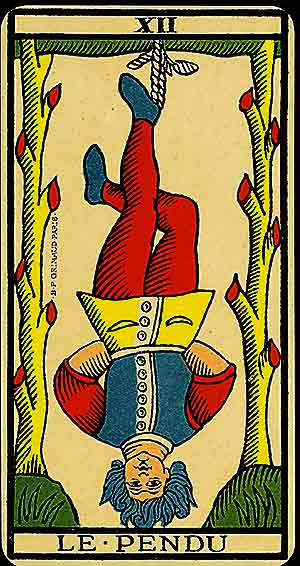 |
||
Your Qualities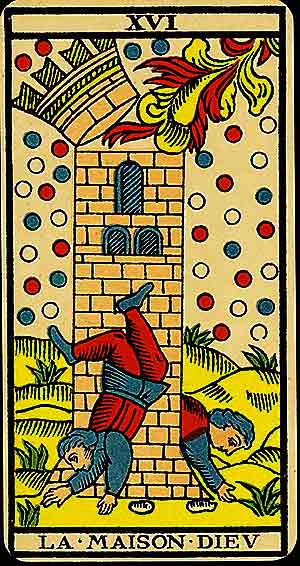 |
Connection (Present)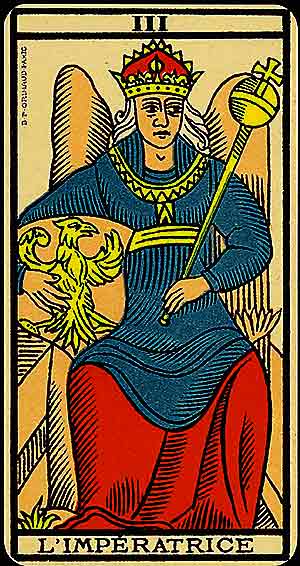 |
Others' Qualities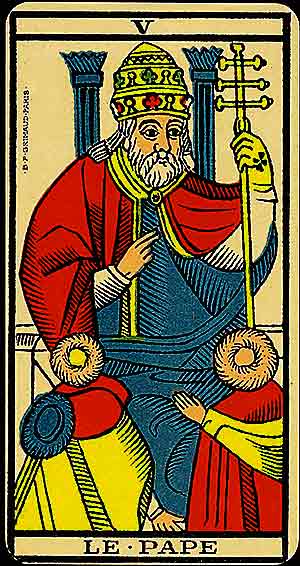 |
What You Bring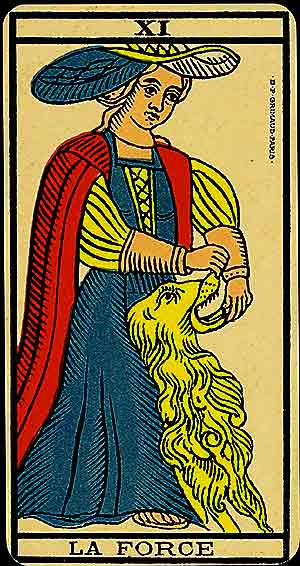 |
Common Base (Past)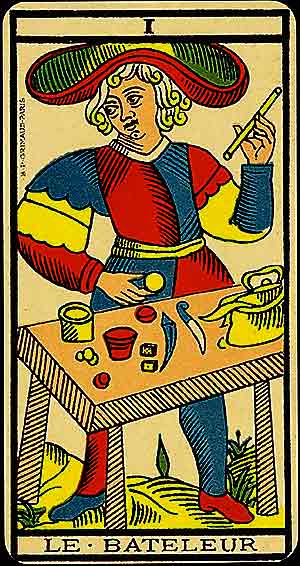 |
What They Bring 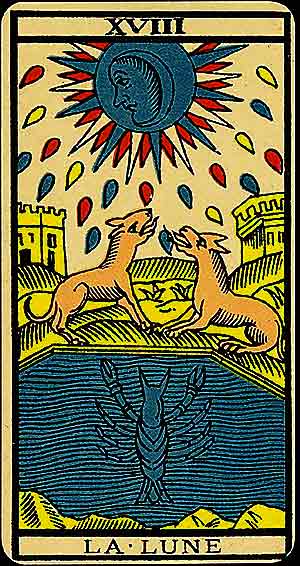 |
7: Mutual Goals
The Hanged Man
(Le Pendu)
Symbolism:
The Hanged Man is shown suspended upside-down by one foot from a live tree, with his free leg bent to form a cross-like shape. His serene expression suggests surrender rather than distress. This represents enlightenment gained through sacrifice or altered perspective. The tree may symbolise the axis mundi, a bridge between worlds.
Meaning:
The Hanged Man symbolises surrender, letting go, and viewing situations from a different perspective. It suggests a pause or suspension of action, encouraging reflection and patience. This card often appears when you need to relinquish control or embrace sacrifice to gain deeper understanding.
In relationships, it can signal a need for a fresh outlook or willingness to adapt. Spiritually, it points to awakening through non-resistance and the acceptance of higher truths.
Keywords:
Surrender, perspective, patience, sacrifice, reflection, letting go, enlightenment, suspension, adaptation, non-resistance.
3: Connection
The Empress
(L'Impératri
Symbolism:
The Empress sits on her throne, holding a scepter that signifies authority. A shield bearing the symbol of Venus is nearby, emphasising love, fertility, and creation. She is adorned in flowing robes, indicating abundance.
Meaning:
The Empress is the archetype of creation and abundance, representing fertility, nurturing, and growth in all aspects of life. She is a motherly figure who provides support and encouragement, guiding you to cultivate your ideas or relationships into something beautiful. Her presence suggests a time of prosperity and fulfilment.
In relationships, she signifies a loving, nurturing connection. Spiritually, she urges you to embrace the rhythms of nature and the divine feminine within you, celebrating life's creative energy.
Keywords:
Creation, abundance, fertility, nurturing, growth, love, prosperity, nature, creativity, fulfilment.
4: Common Base
The Magician
(Le Bateleur)
Symbolism:
The Magician is a youthful figure standing behind a table, holding a wand aloft while other tools lie before him—often a coin, a cup, and a sword. These tools represent mastery over the elements and the power to manifest intentions. His hat, shaped like a lemniscate, symbolises infinite potential, and his posture suggests readiness and action. The vibrant colours of his attire evoke creativity, energy, and a zest for life.
Meaning:
The Magician represents the power of initiative, skill, and resourcefulness. He embodies the ability to turn ideas into reality, combining intellect, action, and willpower. The card often signals the beginning of a new venture or opportunity, where focus and confidence are key. However, it also serves as a warning to avoid manipulation or overconfidence.
The Magician invites you to be aware of your tools and talents, urging you to act with intention. It also reminds you that success depends on your ability to harmonise thought and action.
Keywords:
Initiative, manifestation, skill, potential, confidence, willpower, beginnings, resourcefulness, action, focus.
2: Your Qualities
The Tower
(La Maison Dieu)
Symbolism:
A tall tower struck by lightning collapses as figures fall from its heights, symbolising sudden upheaval. Balls and debris erupt from the structure, representing destruction and chaos. However, the lightning bolt signifies divine intervention, clearing away illusions and false foundations to reveal the truth.
Meaning:
The Tower represents sudden change, upheaval, and the collapse of false structures. While the experience may be shocking or painful, it paves the way for transformation and rebuilding. This card calls for resilience and the ability to embrace new beginnings born from chaos.
In relationships, it may signal a dramatic shift or revelation. Spiritually, it urges you to let go of false beliefs and align with authenticity.
Keywords:
Upheaval, change, chaos, destruction, revelation, transformation, truth, divine intervention, awakening, rebuilding.
1: Their Qualities
The Hierophant
(Le Pape)
Symbolism:
The Hierophant sits between two pillars, with his hand raised in blessing and two followers kneeling before him. He holds a triple cross sceptre, symbolising his spiritual authority. The keys at his feet represent access to higher wisdom and the mysteries of life. His robe and crown emphasise tradition and institutional power.
Meaning:
The Hierophant symbolises tradition, guidance, and spiritual learning. He represents the wisdom passed down through teachings, rituals, and institutions. This card may indicate seeking guidance from a mentor, joining a community, or adhering to established norms. It also encourages you to examine your beliefs and values to ensure they align with your inner truth.
In relationships, the Hierophant suggests shared values and a strong moral foundation. Spiritually, he urges you to connect with divine teachings and the collective wisdom of humanity.
Keywords:
Tradition, guidance, spiritual learning, mentorship, wisdom, community, rituals, institutions, moral alignment, shared values.
6: What You Bring
Strength
(La Force)
5: What They Bring
The Moon
(La Lune)
Symbolism:
The Moon hangs high in the sky, casting a dim, mysterious light over a landscape. A dog and a wolf howl at the moon, representing instincts and the untamed subconscious. A pool sits between two towers, suggesting the unknown. A crayfish crawls out of it, symbolising hidden emotions emerging.
Meaning:
The Moon represents intuition, mystery, and the subconscious. It suggests a time of uncertainty where not everything is as it seems. This card invites you to trust your instincts and explore hidden depths. It also warns against illusion or confusion, urging clarity.
In relationships, it can indicate emotional complexity or hidden dynamics. Spiritually, it calls for embracing intuition and the mysteries of the psyche.
Keywords:
Intuition, mystery, subconscious, illusion, uncertainty, emotions, dreams, instincts, exploration, hidden truths.