 Tarotsmith
 Tarotsmith Shadow Alchemy
 Tarotsmith Horoscopes

Comic Strip Spread
Difficulty: Easy
Note: This spread works best with decks like the Diary of a Broken Soul or Surrealist Tarot because they display scenes rather than pips and do not use reversals.
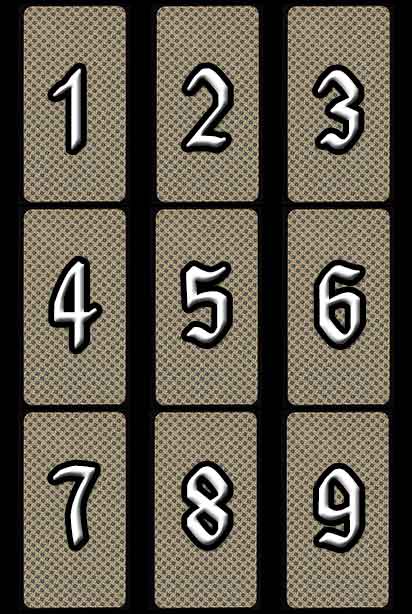
The Comic Strip Spread is a simple nine-card chronological spread that looks like a page of a comic book. This method should be used to get a glimpse of the future as it would pan out naturally. It may be insightful to use this spread in coordination with biorhythms. The spread is easy to read as a storyboard, just like a comic strip.
The main subject is apparent in the first card, while the story plays out through the following tarot cards.
It is important to pay particular attention to the cards and the relationships with their neighbours. Notice which directions the cards are facing, and how they interact.
Your Comic Strip Reading
| Temperance (Tempérance) 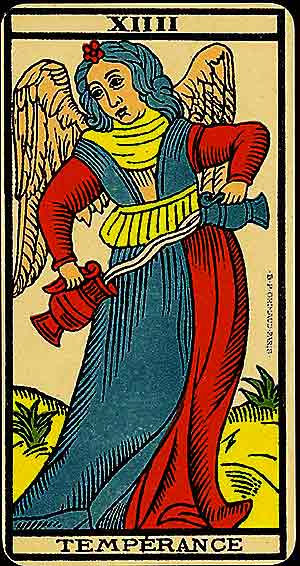 |
The Moon (La Lune) 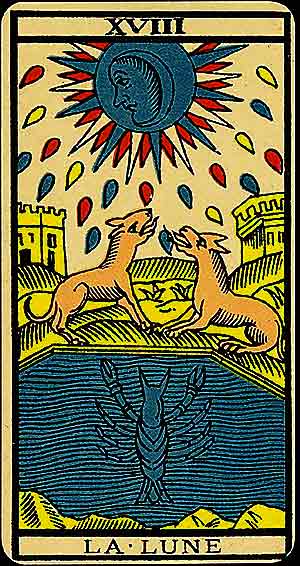 |
Justice (La Justice) 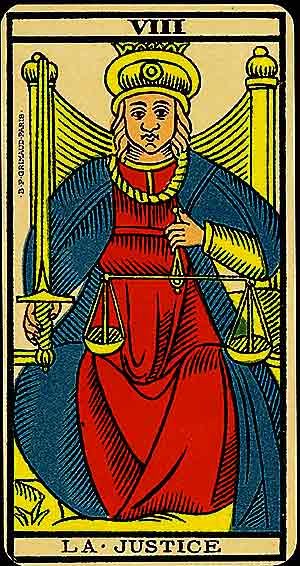 |
| The Star (L'Étoile) 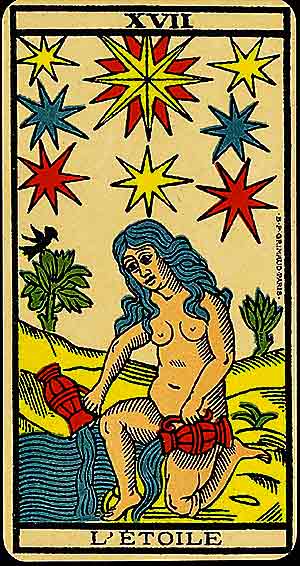 |
The Lovers (L'Amoureux) 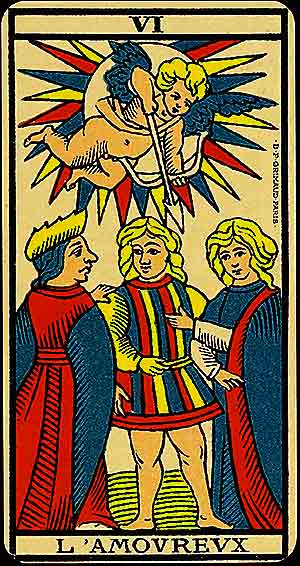 |
The Devil (Le Diable) 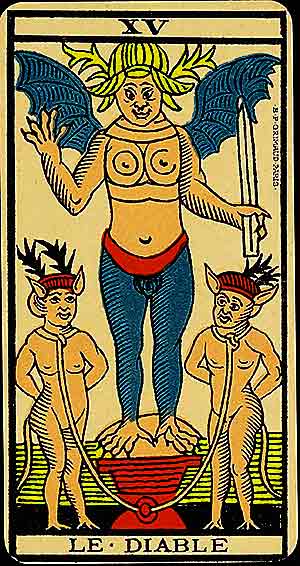 |
| The Sun (Le Soleil) 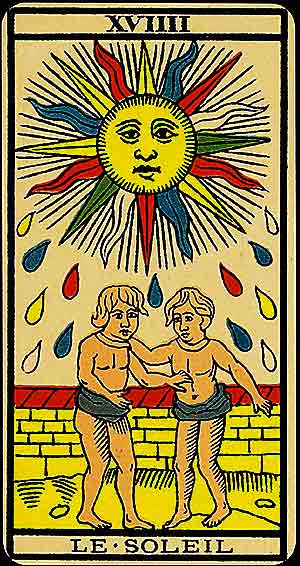 |
The Hanged Man (Le Pendu) 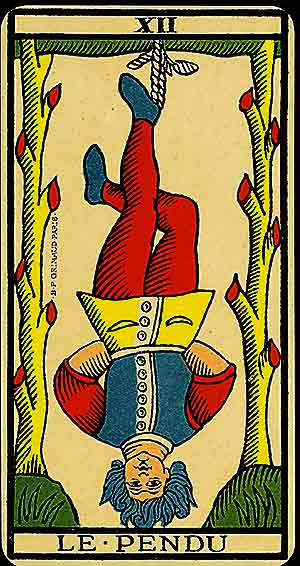 |
The Hierophant (Le Pape) 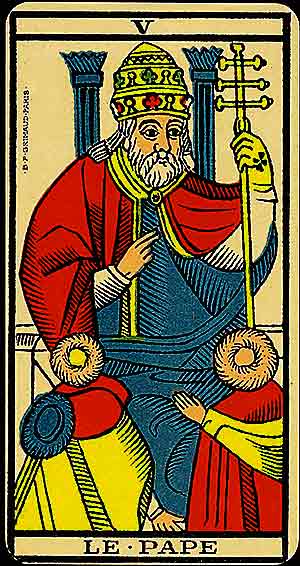 |
Card 1: Temperance
(Tempérance)
Symbolism:
An angelic figure pours water from one cup to another, symbolising balance and the harmonious blending of opposites. One leg is robed in blue, the other in red, reflecting equilibrium between the conscious and subconscious leading to spiritual enlightenment.
Meaning:
Temperance signifies balance, moderation, and the art of blending opposites to create harmony. It encourages patience, self-restraint, and the ability to adapt fluidly to life's changes. This card often appears when you are finding equilibrium in a challenging situation or working toward a greater sense of peace.
In relationships, it suggests compromise and mutual understanding. Spiritually, Temperance represents alignment with your higher self and a focus on unity and integration.
Keywords:
Balance, harmony, moderation, patience, adaptation, unity, self-restraint, healing, integration, peace.
Card 2: The Moon
(La Lune)
Symbolism:
The Moon hangs high in the sky, casting a dim, mysterious light over a landscape. A dog and a wolf howl at the moon, representing instincts and the untamed subconscious. A pool sits between two towers, suggesting the unknown. A crayfish crawls out of it, symbolising hidden emotions emerging.
Meaning:
The Moon represents intuition, mystery, and the subconscious. It suggests a time of uncertainty where not everything is as it seems. This card invites you to trust your instincts and explore hidden depths. It also warns against illusion or confusion, urging clarity.
In relationships, it can indicate emotional complexity or hidden dynamics. Spiritually, it calls for embracing intuition and the mysteries of the psyche.
Keywords:
Intuition, mystery, subconscious, illusion, uncertainty, emotions, dreams, instincts, exploration, hidden truths.
Card 3: Justice
(La Justice)
Symbolism:
Justice sits on a throne, holding a sword in one hand and scales in the other. The sword represents truth and decisiveness, while the scales signify balance and fairness. Her gaze is direct, indicating clarity and impartiality. The symmetrical composition of the card underscores equilibrium and order.
Meaning:
Justice represents truth, fairness, and the consequences of one's actions. It urges you to act with integrity and to weigh all factors before making decisions. This card often appears when a decision needs to be made or when karma is at play, reminding you that actions have lasting repercussions.
In relationships, Justice emphasises honesty and mutual respect. Spiritually, it calls for alignment between your actions and higher principles.
Keywords:
Truth, fairness, balance, integrity, accountability, karma, decisions, clarity, consequences, order.
Card 4: The Star
(L'Étoile)
Symbolism:
A nude female kneels by a stream, pouring water onto the earth and back into the water, symbolising renewal and flow. Above her, stars shine brightly, representing hope and divine guidance. A bird perched in a tree or nearby adds an air of peace and harmony. The scene exudes serenity and openness.
Meaning:
The Star symbolises hope, inspiration, and renewal. It reminds you to trust in the universe and your own potential. This card often appears after a challenging period, offering reassurance and a sense of peace. It encourages vulnerability and faith in the future.
In relationships, it signifies harmony and healing. Spiritually, the Star points to alignment with your higher purpose and divine inspiration.
Keywords:
Hope, inspiration, renewal, peace, faith, healing, guidance, openness, vulnerability, harmony.
Card 5: The Lovers
(L'Amoureux)
Symbolism:
The Lovers card depicts a man standing between two women, with Cupid above aiming an arrow. The scene suggests a choice or a union, with the women often representing opposing influences. In some interpretations, the figures are Adam and Eve, symbolising the duality of earthly and spiritual love.
Meaning:
The Lovers represent connection, harmony, and the power of choice. This card speaks to deep relationships, whether romantic or platonic, and the alignment of values and goals. However, it also highlights the necessity of making meaningful decisions, often at a crossroads where the heart and mind must collaborate.
In relationships, the Lovers symbolise love, commitment, and mutual respect. Spiritually, they encourage balancing the dualities within yourself and finding unity in diversity.
Keywords:
Love, harmony, connection, choice, duality, relationships, unity, attraction, alignment, crossroads.
Card 6: The Devil
(Le Diable)
Symbolism:
The Devil is portrayed as a horned figure with two chained human figures below, representing bondage to materialism or desires. The chains are loose, suggesting self-imposed limitations. Their animalistic features symbolise the materialism and polarity of nature.
Meaning:
The Devil represents temptation, materialism, and the shadow side of human nature. It highlights unhealthy attachments, addictions, or fears that may be holding you back. This card calls for awareness and the courage to break free from self-imposed limitations.
In relationships, it warns of codependency or power imbalances. Spiritually, the Devil challenges you to confront and integrate your shadow self.
Keywords:
Temptation, bondage, materialism, addiction, fear, control, power, shadow self, self-awareness, liberation.
Card 7: The Sun
(Le Soleil)
Symbolism:
The Sun shines brightly over two joyful children, symbolising innocence and vitality. A wall represents protection and growth. The radiant light of the sun signifies clarity, success, and the life force itself.
Meaning:
The Sun represents joy, success, and illumination. It heralds a period of clarity, achievement, and fulfilment. This card encourages positivity, optimism, and self-expression, reminding you to celebrate life's blessings.
In relationships, the Sun signifies warmth, harmony, and mutual happiness. Spiritually, it points to enlightenment and connection with divine light.
Keywords:
Joy, success, clarity, vitality, positivity, enlightenment, achievement, growth, warmth, celebration.
Card 8: The Hanged Man
(Le Pendu)
Symbolism:
The Hanged Man is shown suspended upside-down by one foot from a live tree, with his free leg bent to form a cross-like shape. His serene expression suggests surrender rather than distress. This represents enlightenment gained through sacrifice or altered perspective. The tree may symbolise the axis mundi, a bridge between worlds.
Meaning:
The Hanged Man symbolises surrender, letting go, and viewing situations from a different perspective. It suggests a pause or suspension of action, encouraging reflection and patience. This card often appears when you need to relinquish control or embrace sacrifice to gain deeper understanding.
In relationships, it can signal a need for a fresh outlook or willingness to adapt. Spiritually, it points to awakening through non-resistance and the acceptance of higher truths.
Keywords:
Surrender, perspective, patience, sacrifice, reflection, letting go, enlightenment, suspension, adaptation, non-resistance.
Card 9: The Hierophant
(Le Pape)
Symbolism:
The Hierophant sits between two pillars, with his hand raised in blessing and two followers kneeling before him. He holds a triple cross sceptre, symbolising his spiritual authority. The keys at his feet represent access to higher wisdom and the mysteries of life. His robe and crown emphasise tradition and institutional power.
Meaning:
The Hierophant symbolises tradition, guidance, and spiritual learning. He represents the wisdom passed down through teachings, rituals, and institutions. This card may indicate seeking guidance from a mentor, joining a community, or adhering to established norms. It also encourages you to examine your beliefs and values to ensure they align with your inner truth.
In relationships, the Hierophant suggests shared values and a strong moral foundation. Spiritually, he urges you to connect with divine teachings and the collective wisdom of humanity.
Keywords:
Tradition, guidance, spiritual learning, mentorship, wisdom, community, rituals, institutions, moral alignment, shared values.