 Tarotsmith
 Tarotsmith Shadow Alchemy
 Tarotsmith Horoscopes

Celtic Cross Spread
Difficulty: Average
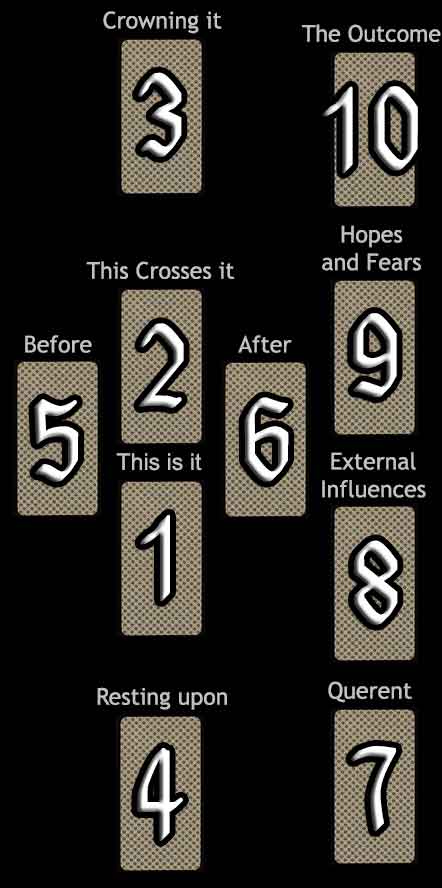
This is probably the most well-known tarot spread. A good, basic spread for beginners to practise with, the Celtic Cross is useful for questions of all types. In this spread, it can be helpful to notice the relationships between the pairings of cards #5 & #9, #1 & #2, #3 & #4, and #6 & #10.
- The significator epitomizes what the reading deals with, the initial situation.
- An added impulse that compounds the significator, which may be either complimentary or contradictory.
- This is what is consciously known (thoughts).
- Unconscious driving forces that may not be known fully (emotions).
- The immediate past regarding the current situation.
- The first future card indicates the immediate future.
- This card represents the reader and their attitude towards cards #1 and #2.
- The external influences, the places and people which influence the topic.
- This tarot card suggests expectations; what is secretly hoped for or feared.
- The second future card reveals the long-term outcome.
Your Celtic Cross Reading
The Crown |
The Outcome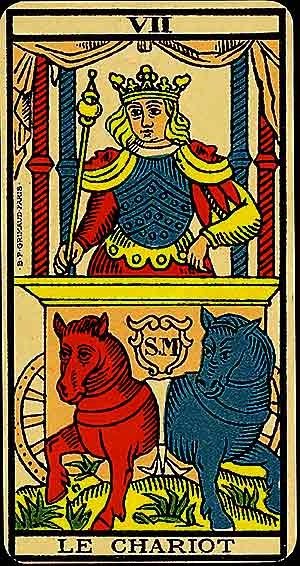 The Chariot (Le Chariot)
External Forces 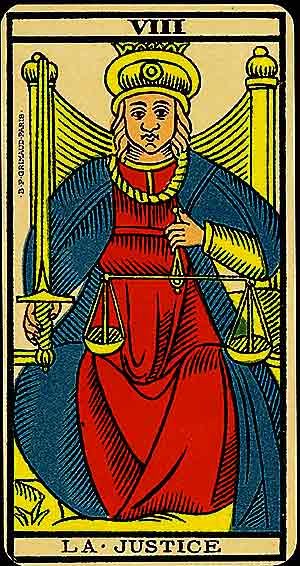 Justice (La Justice)
|
||
The Recent Past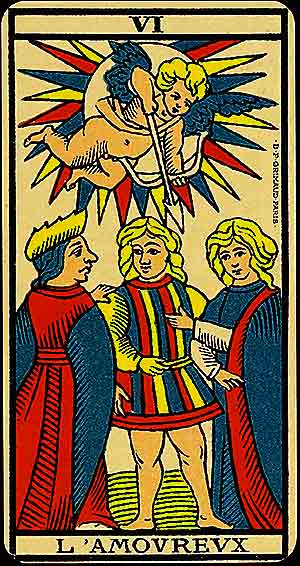 The Lovers (L'Amoureux) |
The Crossing Card
|
The Future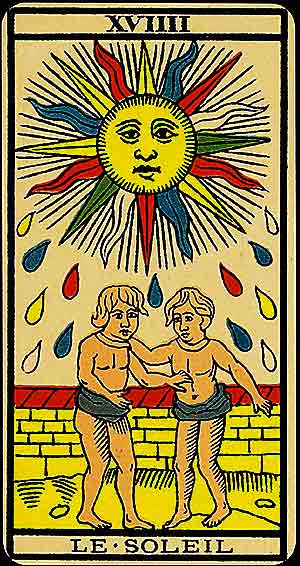 The Sun (Le Soleil) |
|
|
|||
The Significator represents what the main theme of the reading deals with, the initial situation.
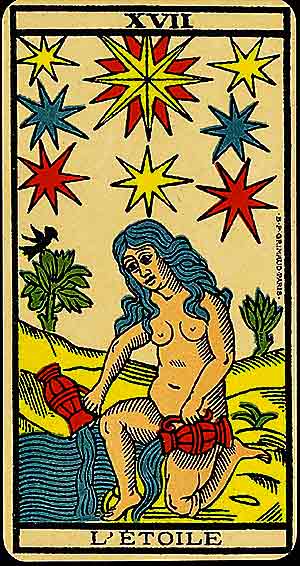
The Star
(L'Étoile)
Symbolism:
A nude female kneels by a stream, pouring water onto the earth and back into the water, symbolising renewal and flow. Above her, stars shine brightly, representing hope and divine guidance. A bird perched in a tree or nearby adds an air of peace and harmony. The scene exudes serenity and openness.
Meaning:
The Star symbolises hope, inspiration, and renewal. It reminds you to trust in the universe and your own potential. This card often appears after a challenging period, offering reassurance and a sense of peace. It encourages vulnerability and faith in the future.
In relationships, it signifies harmony and healing. Spiritually, the Star points to alignment with your higher purpose and divine inspiration.
Keywords:
Hope, inspiration, renewal, peace, faith, healing, guidance, openness, vulnerability, harmony.
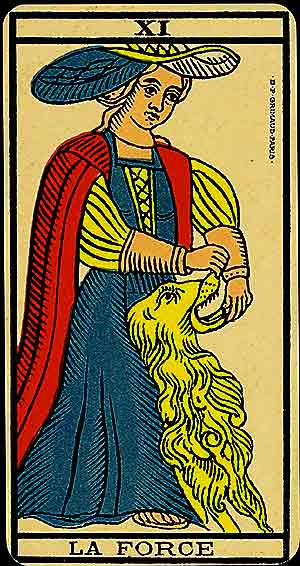
The Crossing Card denotes an added impulse that compounds the initial card, whether complimentary or contradictory.
Strength
(La Force)
Symbolism:
A serene figure, often a woman, gently tames a lion by holding its jaws open. Her calm demeanour contrasts with the lion's ferocity, symbolising mastery of inner strength. Above her head, the infinity symbol signifies limitless power and spiritual resilience. The image evokes vitality and harmony with nature.
Meaning:
Strength represents courage, compassion, and the balance between force and gentleness. This card embodies inner fortitude, suggesting that true power comes from patience, understanding, and self-discipline rather than brute force. It often appears in situations requiring emotional resilience or the taming of one's impulses.
In relationships, it signifies the power of kindness and understanding. Spiritually, Strength encourages connecting with your inner courage and finding peace amidst challenges.
Keywords:
Inner strength, courage, patience, compassion, resilience, self-discipline, confidence, harmony, emotional balance, fortitude.

The Crown stands for what the asker is aware of consciously.
The Hermit
(L'Hermite)
Symbolism:
The Hermit is an elderly figure carrying a lantern and a staff. The lantern symbolises inner wisdom and guidance, while the staff represents support and stability. His cloak signifies introspection, reflecting the solitude of his journey.
Meaning:
The Hermit represents introspection, wisdom, and solitude. He invites you to step back from external distractions and seek answers within. This card often appears during periods of self-discovery, encouraging you to listen to your inner voice.
In relationships, the Hermit may indicate a need for personal space or reflection. Spiritually, it highlights the quest for enlightenment and the value of solitary contemplation.
Keywords:
Wisdom, introspection, solitude, guidance, reflection, self-discovery, enlightenment, patience, inner truth, retreat.
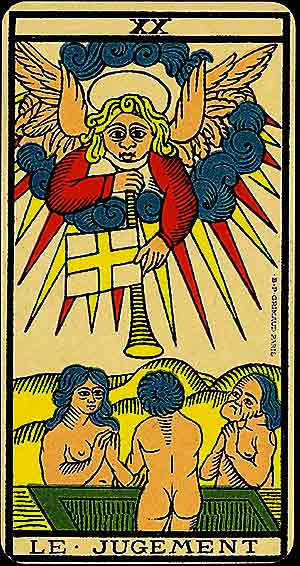
Foundation card reveals unconscious driving forces that the querent may not be aware of.
Judgement
(Le Jugement)
Symbolism:
An angel blows a trumpet as figures rise from coffins below, symbolising resurrection and awakening. The praying hands of the figures reflect surrender and acceptance. The bright light of the angel signifies divine calling and revelation, while the mountains in the background represent challenges overcome.
Meaning:
Judgement represents awakening, self-assessment, and rebirth. It signals a time to evaluate your past and make amends, preparing for a new chapter. This card often appears when you are called to align with your higher purpose and embrace transformation.
In relationships, it suggests healing, forgiveness, or a new beginning. Spiritually, it encourages connection with your true calling.
Keywords:
Awakening, transformation, rebirth, judgement, self-assessment, forgiveness, redemption, clarity, divine calling, renewal.
The Recent Past represents past events and concerns.
The Lovers
(L'Amoureux)
Symbolism:
The Lovers card depicts a man standing between two women, with Cupid above aiming an arrow. The scene suggests a choice or a union, with the women often representing opposing influences. In some interpretations, the figures are Adam and Eve, symbolising the duality of earthly and spiritual love.
Meaning:
The Lovers represent connection, harmony, and the power of choice. This card speaks to deep relationships, whether romantic or platonic, and the alignment of values and goals. However, it also highlights the necessity of making meaningful decisions, often at a crossroads where the heart and mind must collaborate.
In relationships, the Lovers symbolise love, commitment, and mutual respect. Spiritually, they encourage balancing the dualities within yourself and finding unity in diversity.
Keywords:
Love, harmony, connection, choice, duality, relationships, unity, attraction, alignment, crossroads.
The Future depicts that which lies ahead.
Strength
(La Force)
Symbolism:
A serene figure, often a woman, gently tames a lion by holding its jaws open. Her calm demeanour contrasts with the lion's ferocity, symbolising mastery of inner strength. Above her head, the infinity symbol signifies limitless power and spiritual resilience. The image evokes vitality and harmony with nature.
Meaning:
Strength represents courage, compassion, and the balance between force and gentleness. This card embodies inner fortitude, suggesting that true power comes from patience, understanding, and self-discipline rather than brute force. It often appears in situations requiring emotional resilience or the taming of one's impulses.
In relationships, it signifies the power of kindness and understanding. Spiritually, Strength encourages connecting with your inner courage and finding peace amidst challenges.
Keywords:
Inner strength, courage, patience, compassion, resilience, self-discipline, confidence, harmony, emotional balance, fortitude.
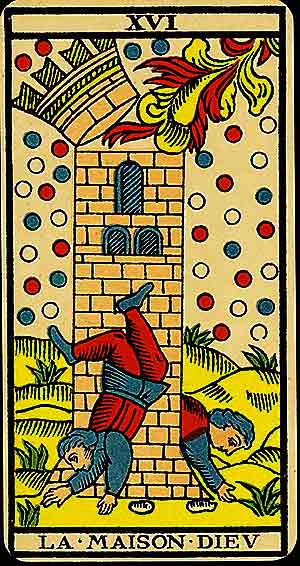
The Querent represents the asker and their attitude towards the subject of the reading.
The Tower
(La Maison Dieu)
Symbolism:
A tall tower struck by lightning collapses as figures fall from its heights, symbolising sudden upheaval. Balls and debris erupt from the structure, representing destruction and chaos. However, the lightning bolt signifies divine intervention, clearing away illusions and false foundations to reveal the truth.
Meaning:
The Tower represents sudden change, upheaval, and the collapse of false structures. While the experience may be shocking or painful, it paves the way for transformation and rebuilding. This card calls for resilience and the ability to embrace new beginnings born from chaos.
In relationships, it may signal a dramatic shift or revelation. Spiritually, it urges you to let go of false beliefs and align with authenticity.
Keywords:
Upheaval, change, chaos, destruction, revelation, transformation, truth, divine intervention, awakening, rebuilding.
External Forces represents the influence of others in your life as well as trends in your relationships with others.
Justice
(La Justice)
Symbolism:
Justice sits on a throne, holding a sword in one hand and scales in the other. The sword represents truth and decisiveness, while the scales signify balance and fairness. Her gaze is direct, indicating clarity and impartiality. The symmetrical composition of the card underscores equilibrium and order.
Meaning:
Justice represents truth, fairness, and the consequences of one's actions. It urges you to act with integrity and to weigh all factors before making decisions. This card often appears when a decision needs to be made or when karma is at play, reminding you that actions have lasting repercussions.
In relationships, Justice emphasises honesty and mutual respect. Spiritually, it calls for alignment between your actions and higher principles.
Keywords:
Truth, fairness, balance, integrity, accountability, karma, decisions, clarity, consequences, order.
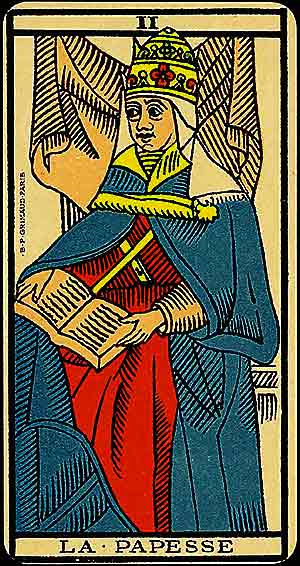
Hopes and Fears shows the expectations you have concerning the outcome of your question.
The High Priestess
(La Papesse)
Symbolism:
The High Priestess is shown seated, holding an open book, signifying hidden knowledge and mysteries. She is flanked by two pillars (sometimes black and white), representing duality and balance. Her veil hints at the separation between the conscious and subconscious. Her serene expression reflects her mastery of the inner world and her connection to divine intuition.
Meaning:
The High Priestess embodies mystery, wisdom, and the power of intuition. She encourages stillness and reflection, guiding you to trust your inner voice over external noise. This card often appears when something hidden needs to be uncovered, whether it's a secret, a truth, or a deeper understanding of oneself.
In relationships, the High Priestess may suggest emotional depth or hidden dynamics. Spiritually, she symbolises the gateway to higher knowledge, urging you to explore the realms of dreams and symbols to uncover your truth.
Keywords:
Intuition, mystery, inner wisdom, reflection, subconscious, hidden knowledge, spirituality, patience, introspection, stillness.
The Outcome of your question. Interpret this card in the context of the entire reading and as an indicator of the path you are currently on, but not necessarily bound to.
The Chariot
(Le Chariot)
Symbolism:
The Chariot shows a warrior standing in a chariot pulled by two horses of contrasting colors, symbolising opposing forces. The warrior wears a crown and holds a wand or reins, signifying control and determination. The canopy above him suggests moving forward from a place of stability into the unknown.
Meaning:
The Chariot signifies triumph through determination, discipline, and focus. It speaks to mastering conflicting forces and steering your life toward success. This card often appears when you are on the brink of achieving a goal, but it reminds you that persistence and self-control are essential.
In relationships, the Chariot suggests navigating challenges together. Spiritually, it emphasises aligning your willpower with your higher purpose.
Keywords:
Triumph, determination, focus, control, discipline, victory, mastery, momentum, perseverance, alignment.