 Tarotsmith
 Tarotsmith Shadow Alchemy
 Tarotsmith Horoscopes


Relationship Spread #2
Difficulty: Easy
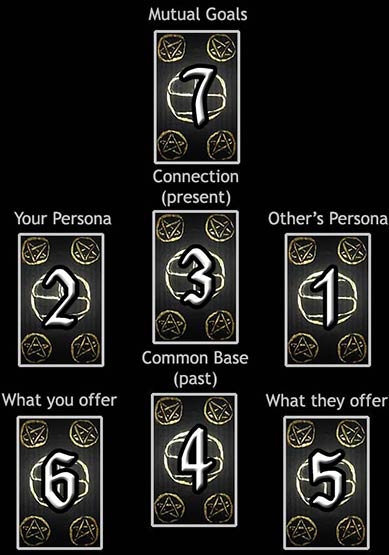
This relationship spread focuses more on the common ground of the relationship, with three cards in the middle column showing the common ground. The middle column essentially displays the past, present, and future of the relationship.
Card #4 stands for the common base of the relationship, which may be thought of as the past events which have shaped their characters, bringing them together. The current connection that binds them together is Card #3, indicating the values shared. Card #7 implies the common goals that would keep the pair together moving into the future.
The columns on either side show what each partner brings to the table. Remember, relationships need not be romantic, and the partners could even be groups rather than individuals. In this layout, the other person is on the left-hand side and the reader on the right.
Cards #1 & #2 indicate the separate personalities of each member of the relationship. These cards form a sort of bridge with the cards beneath them, #5 & #6, which show the qualities that each partner offers the other person, and thus to the relationship as a whole.
Your Relationship #2 Reading
Mutual Goals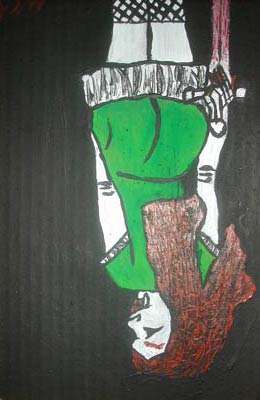 |
||
Your Qualities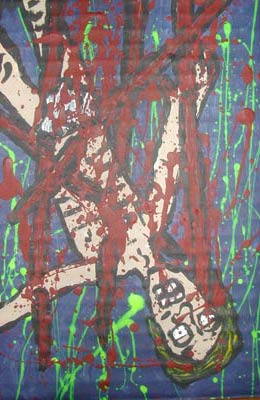 |
Connection (Present)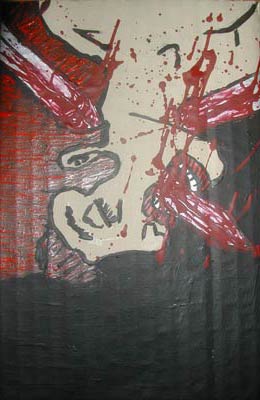 |
Others' Qualities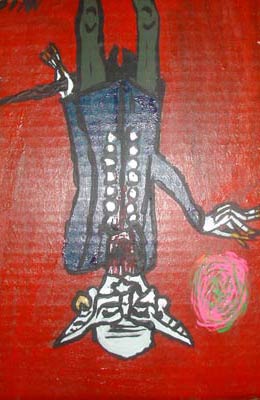 |
What You Bring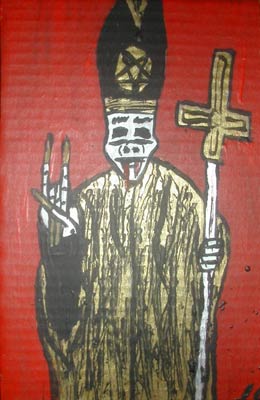 |
Common Base (Past)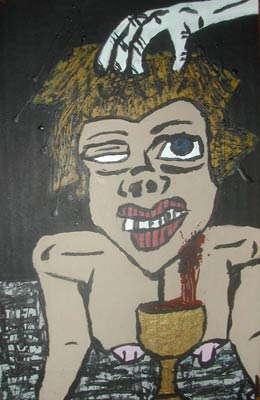 |
What They Bring 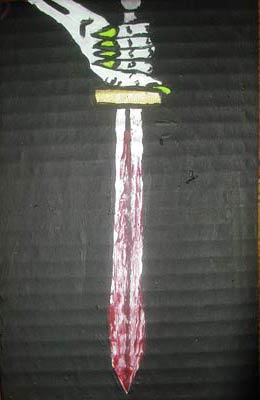 |
7: Mutual Goals
Queen of Swords
Reversed
Symbolism:
The Queen of Swords stands tall, her gaze unwavering as she flaunts herself with calculated poise. Her demeanor combines sorrow and sharpness, reflecting wisdom earned through hardship. A single sword rests in her hand, pointed skyward, symbolizing clarity, truth, and intellect. The surrounding environment is barren yet serene, highlighting her emotional resilience and detachment.
Meaning:
The Queen of Swords represents intellect, independence, and clear judgment. She is a figure of sharp wit and decisive action, unafraid to make difficult choices. This card often symbolizes someone who has weathered emotional storms and now relies on logic and fairness to navigate life. It calls for honesty, objectivity, and discernment in your decisions.
Reversed, the Queen of Swords warns of malice, manipulation, or the misuse of intellect. It can indicate someone who is overly critical, cold, or deceitful. This card may also suggest clouded judgment or emotional imbalances affecting decision-making.
Keywords:
Reversed: Malice, manipulation, emotional imbalance, deceit, criticism, clouded thinking.
3: Connection
Two of Swords
Reversed
Symbolism:
A sword protrudes from the mouth of a female, symbolizing a smooth talker or someone who has the ability to communicate forcefully.
Meaning:
The Two of Swords represents difficult decisions, indecision, and mental conflict. It suggests being at a crossroads, where a choice must be made, but there is uncertainty or unwillingness to make it. This card symbolizes balance and the need to weigh options carefully.
When reversed, it indicates dishonesty, manipulation, or a refusal to face the truth. It can also suggest that the choice has been made, but with negative consequences such as betrayal or deception.
Keywords:
Reversed: Betrayal, deceit, falsehood, avoidance.
4: Common Base
Ace of Cups
Symbolism:
A pale hand drains the life force out of a female who has sacrificed herself to fill an unholy grail. This act of devotion and consumption illustrates the intense, transformative power of emotional energy. The grail symbolizes the heart, while the act of sacrifice represents the giving and receiving of love, both nourishing and consuming.
Meaning:
The Ace of Cups represents new beginnings in matters of the heart, overflowing with emotional potential. It is a card of love, joy, and emotional fulfillment, suggesting the start of a fresh emotional journey or a deepened connection with others. It signifies a time of abundance, where feelings of happiness, empathy, and compassion can fill your life.
Keywords:
Upright: New beginnings, emotional fulfillment, love, joy, abundance, compassion.
2: Your Qualities
Five of Stakes
Reversed
Symbolism:
A man trapped in a pit, impaled by five stakes, fights against overwhelming odds. The struggle is real and relentless, representing competition, ambition, and the challenges faced in the pursuit of success. His tattered state hints at the toll such pursuits can take on one's spirit.
Meaning:
The Five of Stakes represents conflict, rivalry, and the test of one's determination. It reflects the spirited competition and the drive to rise above challenges. While the fight may be strenuous, it also forges resilience and sharpens your focus. This card encourages perseverance despite obstacles.
Reversed, the card warns of deceit, disputes, or challenges born from misunderstandings. It calls for honesty and clarity in your actions.
Keywords:
Reversed: Disputes, deception, confusion, hypocrisy.
1: Their Qualities
I. The Magician
Reversed
Symbolism:
The Magician is depicted as a Nosferatu vampire standing in a commanding pose, a sphere of influence hovering above his outstretched hand. This sphere glows with an otherworldly light, symbolizing his power to manipulate unseen forces. His posture exudes confidence, and the tools of his craft—representing the elements—are subtly embedded in the imagery, hinting at his mastery over earth, air, fire, and water. The shadows around him pulse with potential, representing untapped energy and possibility.
Meaning:
The Magician embodies willpower, creativity, and the ability to manifest one's desires. He is the ultimate initiator, reminding you that you have the power within to transform ideas into reality. This card urges action and focus, calling upon the seeker to harness their innate talents and take charge of their destiny. In situations requiring ingenuity or problem-solving, the Magician assures you that all the tools you need are at your disposal.
Reversed, this card warns of misuse of power, manipulation, or deceit. It may suggest self-doubt, a lack of clarity, or misguided actions that backfire due to overconfidence or ill intentions.
Keywords:
Reversed: Manipulation, deception, power misuse, lack of direction, overconfidence, self-doubt.
6: What You Bring
V. The Hierophant
5: What They Bring
Ace of Swords
Reversed
Symbolism:
A hand emerges from the clouds, gripping a freshly used sword. The sword gleams with power, representing intellectual triumph and clarity that has recently been achieved. The imagery suggests that a great mental breakthrough has just occurred or is about to.
Meaning:
The Ace of Swords represents new ideas, clarity, and breakthroughs. It symbolizes the power of the mind, sharp thinking, and intellectual triumph. It is a card of victory through the use of force or the triumph of reason and logic. It suggests clear communication, decision-making, and the overcoming of challenges.
Reversed, the Ace of Swords signifies confusion, indecision, or an inability to see the truth. It may also represent false starts, miscommunication, or mental blocks.
Keywords:
Reversed: Confusion, falsehood, mental block, indecision.