 Tarotsmith
 Tarotsmith Shadow Alchemy
 Tarotsmith Horoscopes

Decision Spread
Difficulty: Easy
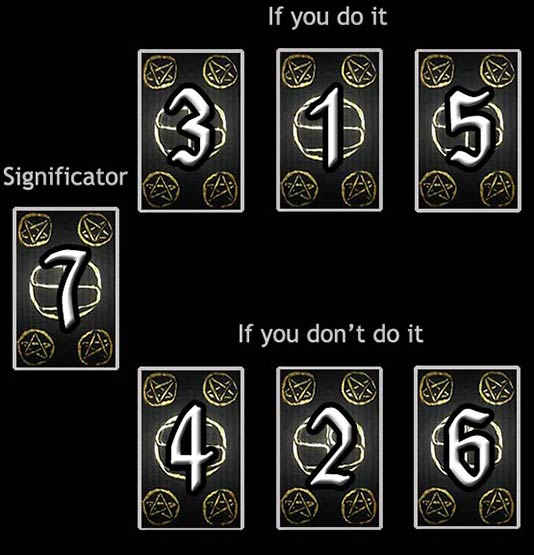
This simple but highly useful spread calls for a question to be asked in this format:
'What happens if I do (X), and what happens if I do not do (X)?'
Please note that it should not be viewed as a decision between two different options, but about whether a single option should be exercised or not. A second option would call for a separate reading.
Card #7 is the significator, the overall theme of the query.
Cards #3, #1, & #5 represent the chronological sequence of events that occurs if the reader chooses to do (X).
Cards #4, #2, & #6 represent the chronological sequence of events that unfolds if the reader chooses not to do (X).
Your Decision Reading
The Significator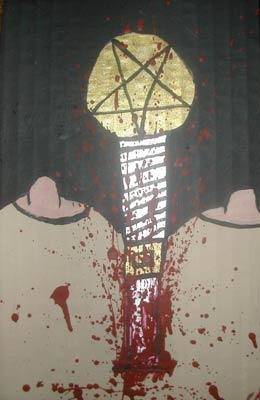 Ace of Pentagrams |
Outcome if you do it: | ||
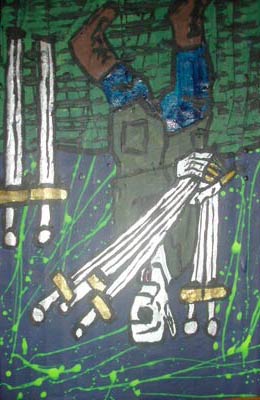 Seven of Swords |
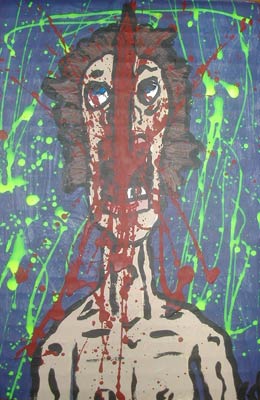 Ace of Stakes |
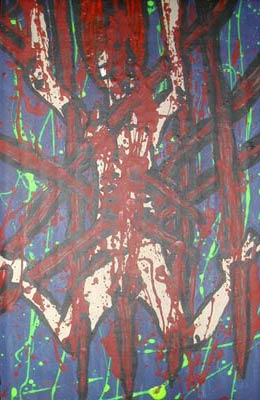 Nine of Stakes |
|
| Outcome if you don't do it: | |||
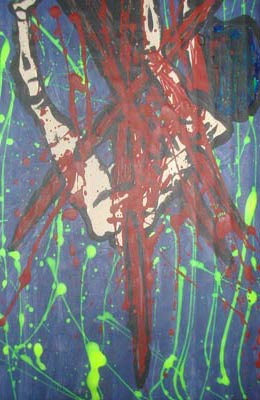 Four of Stakes |
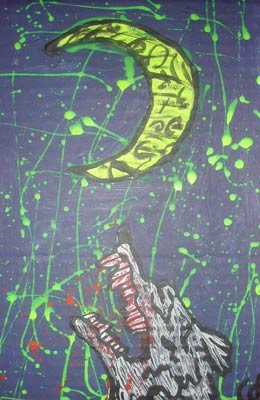 XVIII. The Moon |
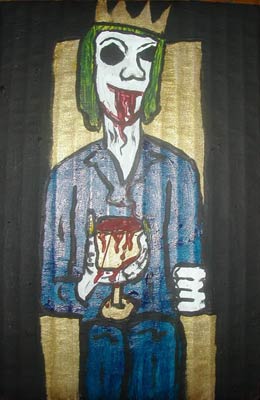 King of Cups |
|
Ace of Pentagrams
Symbolism:
A pentagram rests as an orb upon a sceptre, impaling a female vampire in the heart. This act is not one of violence, but of love—symbolizing a powerful force that connects creation and destruction. The pentagram, a symbol of power and balance, represents material beginnings, prosperity, and the strength that lies within one's creative or financial pursuits.
Meaning:
The Ace of Pentagrams signifies new beginnings in material or financial matters. It heralds prosperity, intelligent planning, and the initiation of creative projects. It may point to the birth of an idea that will grow into something tangible and successful. This card invites you to tap into your skills and resources to manifest your desires.
Keywords:
Upright: Prosperity, new beginnings, material success, creativity, financial opportunity.
Outcome if you do it:
Seven of Swords
Reversed
Symbolism:
A cunning thief is shown stealing five of seven swords, his movements calculated and deliberate. He takes only what he can carry, leaving just enough behind to avoid detection. This image portrays strategy, cleverness, and moral ambiguity, reflecting the complexity of navigating difficult situations.
Meaning:
The Seven of Swords represents strategy, cunning, and the courage to take calculated risks. It suggests that bold action may be necessary to achieve your goals, even if it challenges conventional ethics. The card also highlights the importance of discretion and planning in overcoming obstacles.
Reversed, the Seven of Swords warns of dangerous plans that may fail or expose you to harm. It can indicate quarrels, deceit, or gossip that undermines trust. This card urges caution and vigilance in the face of potential betrayal or missteps.
Keywords:
Reversed: Failure, exposure, betrayal, quarrels, gossip, danger.
Ace of Stakes
Symbolism:
A gruesome image of a wand protruding violently from a man's gory mouth speaks of an unsettling birth of new energy. The blood and horror in the scene hint at the raw, primal force of creation and the sometimes destructive nature of beginnings. The Ace of Stakes is imbued with potential and an uncontainable spark of energy, emphasizing both opportunity and the challenges of harnessing such power.
Meaning:
The Ace of Stakes represents the genesis of an idea, a bold new venture, or the start of a passionate endeavor. It speaks to raw energy, inspiration, and an awakening of latent talents. This card calls on you to seize opportunities with courage and creativity, even if they feel daunting or chaotic. It's a card of new beginnings, enterprise, and the ability to transform challenges into strengths.
Keywords:
Upright: Beginnings, creation, inspiration, enterprise, boldness, potential, energy.
Nine of Stakes
Reversed
Symbolism:
A grotesque figure hangs upside down, pierced by nine stakes in a horrific display of defiance and suffering. The unsettling scene illustrates the resilience required to endure opposition and remain steadfast in the face of challenges.
Meaning:
The Nine of Stakes is a card of resilience and strength under pressure. It symbolizes the final push before success, encouraging you to persevere despite fatigue or hardship. This card warns of challenges but assures you that your determination will see you through.
Reversed, the card signals obstacles, delays, or setbacks. It may also indicate a need for rest or recovery before resuming the fight.
Keywords:
Reversed: Setbacks, fatigue, delays, obstacles, vulnerability.
Outcome if you do not do it:
Four of Stakes
Reversed
Symbolism:
A nude figure hangs suspended mid-air by four bloody stakes. This haunting tableau evokes themes of rest, stability, and a grim sense of harmony. The stakes form a secure structure, suggesting that even amidst horror, there can be moments of peace and reprieve.
Meaning:
The Four of Stakes symbolizes a haven or moment of stability amidst chaos. It represents harmony, home, and the celebration of achieved milestones. This card is a reminder to cherish moments of peace and recognize the beauty in completion. It signifies prosperity and contentment within your personal or professional life.
Reversed, the card takes on a lighter tone, suggesting ongoing prosperity, embellishment, or safety in unconventional ways.
Keywords:
Reversed: Prosperity, unconventional success, safety, security.
XVIII. The Moon
Symbolism:
The Moon is depicted as a blood-red orb casting an eerie glow over a desolate landscape. Two wolves—one dark and one light—howl at the moon, representing instinct and duality. A twisted, thorn-covered path winds between them, leading into a dense forest shrouded in mist. Shadows shift and twist unnaturally, suggesting the illusions and fears that dwell in the subconscious.
Meaning:
The Moon symbolizes intuition, dreams, and the realm of the subconscious. It warns of illusions, hidden truths, or fears clouding your judgment. This card encourages trusting your instincts and exploring your inner world to uncover what lies beneath the surface.
Keywords:
Upright: Intuition, dreams, subconscious, illusion, mystery, emotions, uncertainty.
King of Cups
Symbolism:
Seated upon his throne, the King clasps a full chalice in hand. The King embodies emotional mastery, wisdom, and balance, symbolizing the ability to rule over emotions and guide others with compassion.
Meaning:
The King of Cups represents emotional maturity, control, and wisdom. He is a master of his feelings and uses his emotional intelligence to guide others. This card signifies someone who is emotionally stable, compassionate, and deeply understanding. The King offers counsel, support, and emotional protection to others and is often a symbol of balance in relationships and emotional wellbeing.
Keywords:
Upright: Emotional maturity, wisdom, stability, compassion, emotional intelligence, guidance.