 Tarotsmith
 Tarotsmith Shadow Alchemy
 Tarotsmith Horoscopes

Cross Spread
Difficulty: Easy
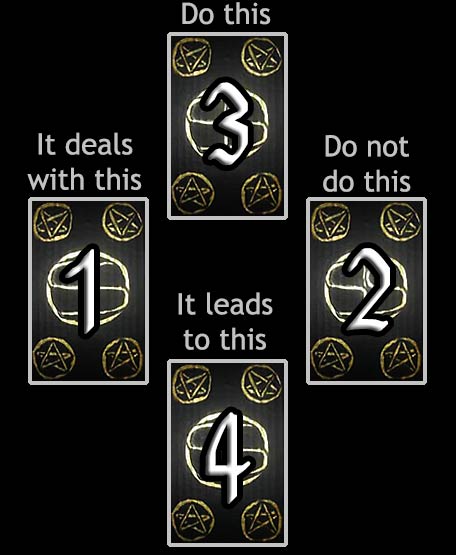
The Cross Spread is good for questions asking for advice. It can also be used to determine the meaning of a confusing card from a previous reading, or for that matter, to shed light on other points of confusion.
In questions asking advice, this tarot spread is self-explanatory. The main thing is to determine the difference between cards #2 and #3. #1 is the topic and #4 is the result.
In questions regarding confusion, such as: "What was the meaning of Card (X) in the last spread?" the main thing is also to determine the difference between cards #2 and #3. In this case, #2 will show what the card was not referring to, and Card #3 will show what was really meant. Card #1 is the topic and #4 represents the purpose it serves.
Your Cross Reading
DO This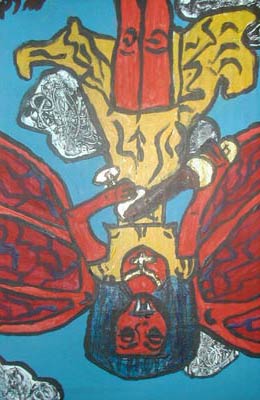 XIV. Temperance |
||
It Deals with This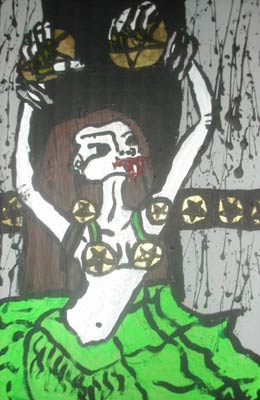 Ten of Pentagrams |
Do NOT Do This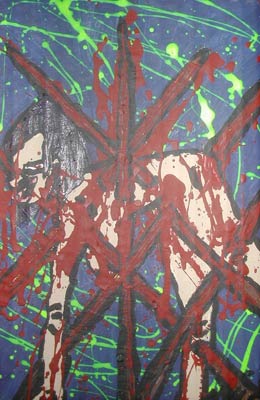 Six of Stakes |
|
It Leads to This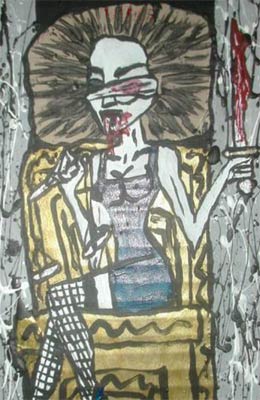 XI. Justice |
It Deals with This
Ten of Pentagrams
Symbolism:
An exotic dancer raises the energy of her audience, clasping pentagrams in hand. This scene represents the completion of a cycle, where comfort, security, and family are at the forefront of life.
Meaning:
The Ten of Pentagrams signifies family, wealth, and long-term security. It reflects a period of contentment, with all your material and emotional needs met. This card highlights the importance of legacy, home, and lasting success.
Keywords:
Upright: Family, wealth, legacy, security, completion.
Do NOT Do This
Six of Stakes
Symbolism:
A female cadaver, suspended by six stakes, serves as a macabre warning to all who pass. The stakes are arranged as a barrier, both defensive and triumphant, symbolizing victory achieved at a great cost. The ominous scene speaks of hard-won triumphs and the fulfillment of one's ambitions, albeit shadowed by loss.
Meaning:
The Six of Stakes signifies triumph and recognition. It represents a well-earned victory and the satisfaction of achieving goals through perseverance and hard work. This card heralds positive news and fulfillment of long-held desires. It also reminds you to remain humble and grateful in success.
Reversed, the Six warns of delays, paranoia, or feelings of insecurity despite external achievements. It can also point to betrayal or fear of losing one's position.
Keywords:
Upright: Victory, recognition, accomplishment, good news, fulfillment, hope.
Reversed: Delays, fear, betrayal, disloyalty, insecurity.
DO This
XIV. Temperance
Reversed
Symbolism:
Temperance is represented by a vampiric figure gracefully pouring a stream of crimson liquid from one chalice into another, symbolizing balance and harmony. She stands with one foot in a dark pool and the other on solid ground, representing the interplay between emotion and reason. Her wings are half-feathered, half-batlike, indicating the union of opposing forces. The background shifts between twilight and dawn, underscoring equilibrium.
Meaning:
Temperance embodies balance, moderation, and the harmonious blending of opposites. It encourages patience and the careful integration of different aspects of your life. This card often suggests the need for self-restraint, collaboration, or finding common ground in a situation.
Reversed, Temperance warns of excess, discord, or impatience. It may indicate a lack of balance or difficulty reconciling conflicting priorities or emotions.
Keywords:
Reversed: Excess, imbalance, discord, impatience, extremes, lack of focus.
It Leads to This
XI. Justice
Symbolism:
Justice is depicted as a pale, vampiric figure holding a pair of scales in one hand and a blood-stained sword in the other. One side of the scale holds a black feather, while the other holds a human heart, symbolizing the balance between moral accountability and emotional truth. Her blindfold is sheer, hinting at impartiality tempered with insight. Behind her, a blood-red curtain reveals fragmented mirrors reflecting distorted truths.
Meaning:
Justice embodies fairness, truth, and accountability. She calls for honesty and objectivity in your actions and decisions, ensuring that you consider all perspectives before rendering judgment. This card often signals the need to weigh your choices carefully and to take responsibility for the consequences of past actions.
Keywords:
Upright: Fairness, truth, accountability, integrity, balance, objectivity, karma.