 Tarotsmith
 Tarotsmith Shadow Alchemy
 Tarotsmith Horoscopes

Game Plan Spread
Difficulty: Easy
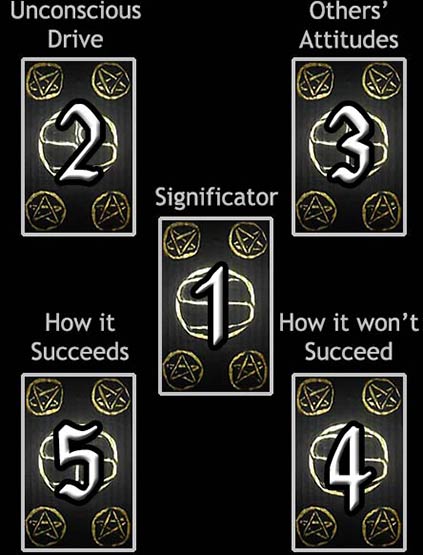
When a person has a certain plan in mind, this simple five-card spread presents a choice, hinting at what action or attitude should be taken for their plan to succeed, and what should be avoided to help the plan work out for the best.
The initial card is laid in the centre of the layout, the significator. The following four cards are laid out clockwise around the significator.
In this spread, the second card is about what drives the reader, but also says they are not fully conscious of this, perhaps even completely unaware of it. It provides a hint as to the reason they strive for their goal.
The third card uncovers what others think of the reader and their goals. The reader may or may not be aware of this. Sometimes other people factor into the plans (and sometimes they don't).
The fourth card suggests what not to do. If things are permitted to go down this path, the plan will collapse.
The fifth card is a hint as to how to make this plan work out favourably. The idea this card presents should be followed to make the plan successful. It is the differences between Cards #4 & #5 that should be noted, as the differences provide important clues.
Your Game Plan Reading
Unconscious Drive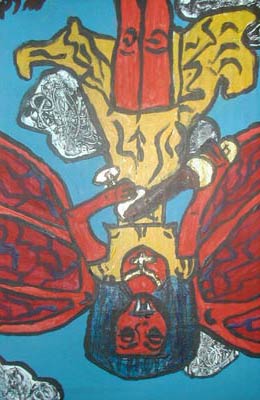 XIV. Temperance |
External Influences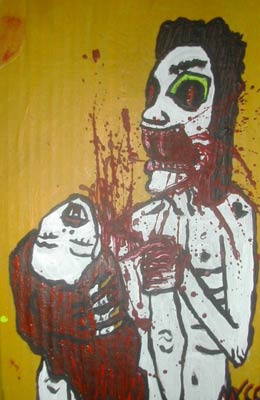 VI. The Lovers |
|
Significator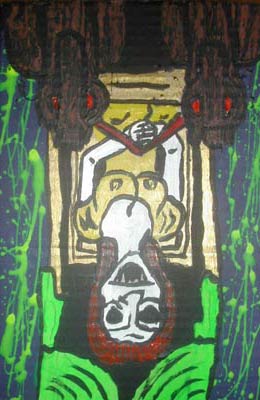 VII. The Chariot |
||
How it Will Succeed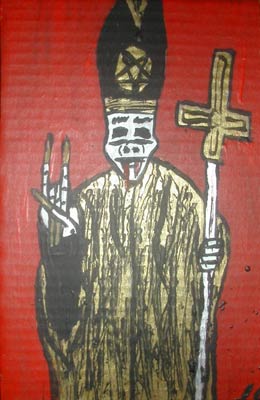 V. The Hierophant |
How it Will Not Succeed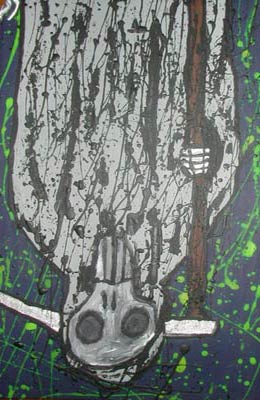 XIII. Death |
VII. The Chariot
Reversed
Symbolism:
The Chariot is a sinister yet majestic vehicle drawn by two spectral horses, one black and one white, representing opposing forces. A Nosferatu figure stands at its helm, cloaked in shadows, holding a whip of shadowy tendrils. The chariot races through a mist-laden nightscape, its wheels crushing fallen leaves and brittle bones, symbolizing the journey's sacrifices and challenges.
Meaning:
The Chariot signifies determination, control, and the will to overcome obstacles. It calls for focused effort and harnessing conflicting energies to achieve a goal. This card often appears when decisive action and self-discipline are needed to navigate a complex situation. It encourages you to take charge of your direction and steer with purpose.
Reversed, the Chariot warns of recklessness, a loss of direction, or being overwhelmed by opposing forces. It may also point to a lack of confidence or an inability to move forward.
Keywords:
Reversed: Lack of control, recklessness, stagnation, self-doubt, misdirection, failure to progress.
XIV. Temperance
Reversed
Symbolism:
Temperance is represented by a vampiric figure gracefully pouring a stream of crimson liquid from one chalice into another, symbolizing balance and harmony. She stands with one foot in a dark pool and the other on solid ground, representing the interplay between emotion and reason. Her wings are half-feathered, half-batlike, indicating the union of opposing forces. The background shifts between twilight and dawn, underscoring equilibrium.
Meaning:
Temperance embodies balance, moderation, and the harmonious blending of opposites. It encourages patience and the careful integration of different aspects of your life. This card often suggests the need for self-restraint, collaboration, or finding common ground in a situation.
Reversed, Temperance warns of excess, discord, or impatience. It may indicate a lack of balance or difficulty reconciling conflicting priorities or emotions.
Keywords:
Reversed: Excess, imbalance, discord, impatience, extremes, lack of focus.
VI. The Lovers
Symbolism:
The Lovers stand under a blood-red moon, their forms entwined yet distinct. One figure appears human, while the other is clearly vampiric, emphasizing the tension between attraction and duality. Between them, a single rose blooms, its petals tinged with crimson—a symbol of both love and sacrifice. In the background, a shadowy figure looms, hinting at the influence of external forces or choices yet to be made.
Meaning:
The Lovers symbolize connection, union, and the choices that shape our relationships and paths. This card often appears during moments of deep emotional connection or when a major decision requires alignment with your values and desires. It reminds you to consider the balance of give and take in relationships, whether romantic, platonic, or spiritual.
Keywords:
Upright: Love, connection, union, harmony, choice, alignment, trust, passion.
XIII. Death
Reversed
Symbolism:
Death is depicted as a cloaked, skeletal figure riding a dark horse with glowing red eyes. In one hand, it wields a scythe, its blade glinting in the moonlight, while the other hand scatters withered petals onto the barren ground. The landscape around them is bleak, with twisted trees and ruins, but in the distance, the faint glow of dawn promises renewal. At the figure's feet, flowers begin to bloom amid the decay.
Meaning:
Death symbolizes transformation, endings, and the promise of new beginnings. It encourages you to release what no longer serves you, making way for growth and renewal. This card often marks a significant transition or the closure of a chapter in life, reminding you that every ending carries the seed of a new beginning.
Reversed, Death warns of resistance to change, fear of endings, or stagnation. It may suggest clinging to the past or delaying the inevitable.
Keywords:
Reversed: Resistance, fear of change, stagnation, clinging to the past, avoidance, inertia.
V. The Hierophant
Symbolism:
The Hierophant stands in a candlelit crypt, robed in dark ceremonial attire. His face is obscured by a mask resembling a skull, emphasizing his role as a mediator between the living and the dead. In his hands, he holds an ancient grimoire, its pages glowing faintly as if infused with sacred knowledge. Behind him, shadowy figures bow in reverence, symbolizing tradition and the transfer of esoteric teachings.
Meaning:
The Hierophant represents tradition, spiritual guidance, and conformity to established systems of belief. He serves as a bridge between the divine and the mundane, reminding you to honor time-tested wisdom and moral values. This card often calls for introspection about your relationship with tradition and how it shapes your choices. It may also suggest seeking counsel or mentorship from someone with greater experience or spiritual authority.
Keywords:
Upright: Tradition, spiritual guidance, mentorship, morality, conformity, ritual, education.